


Bluetooth technology has been with us for a long time – and for just as long, a number of myths have been circulating about this wireless connection. Chief among them is the unfounded concern that Bluetooth headphones could be harmful. We take a closer look at this and a few other Bluetooth myths and clear up the misconceptions.
All-clear: Bluetooth headphones are harmless
Most Bluetooth devices use transmission classes 2 and 3 and, due to their low transmission power, always remain below the recommended maximum limits – this reassurance comes from the German Federal Office for Radiation ProtectionOpens in new tab. In fact, you’re actually doing yourself a favor if you make calls via Bluetooth headphones instead of holding your phone to your ear – for example with our REAL BLUE with built-in hands-free functionOpens in new tab.
 Opens in new tab
You can find more myths and facts about Bluetooth devices here:
For better understanding: How does Bluetooth work?
Bluetooth, alongside Wi-Fi, is an important and widely used wireless standard. It is installed across manufacturers in numerous devices and works like this: When you connect your smartphone to a Bluetooth speaker, for example, the two devices communicate via high-frequency electromagnetic fields. This is where the “Bluetooth radiation” occurs. Over this very stable connection, the devices exchange data wirelessly – usually over short distances.
How far a Bluetooth signal reaches depends on the transmission class. Classes 2 and 3 achieve ranges of 5 to 30 meters. This standard is built into most devices – such as Bluetooth headphones, speakers, wearables, and most smartphones. With class 1, ranges of 100 meters or even more are possible.
Bluetooth radiation: only a small part of everyday electrosmog
In everyday life, we are almost constantly surrounded by electrical radiation, also known as electrosmog. Bluetooth contributes to this as well. However, the radiation emitted by conventional Bluetooth devices is very low – lower than that of a smartphone or a Wi-Fi router, for example.
SAR – the unit of measurement for electromagnetic radiation
The unit used to assess how strong the emitted radiation is called the Specific Absorption Rate (SAR). It indicates how much radiation is absorbed by the human body. Naturally, there are regulations and maximum limits. These come from the Federal Office for Radiation Protection and state that up to 0.08 watts per kilogram of total body weight, or up to 2 watts per kilogram locally in specific parts of the body, are considered harmless. The latter refers, for example, to the head.
How high is the radiation from smartphones and Bluetooth headphones?
You can look up SAR values for specific smartphones at the Federal Office for Radiation ProtectionOpens in new tab. A few concrete examples:
- Huawei P30: SAR value at the ear 0.33, SAR value on the body 0.85.
- Apple iPhone 11: SAR value at the ear 0.95, SAR value on the body 0.99
- Samsung Galaxy S10: SAR value at the ear 0.48, SAR value on the body 1.59
The Apple AirPods – which were among the first true wireless in-ear headphones – have a class 1 transmission power, providing a long range, and also have a SAR value comparable to that of smartphones, namely 0.466 watts per kilogram. This is still well below the limit of 2 watts.
Most other Bluetooth headphones, including the REAL BLUE TWS 3Opens in new tab from Teufel, belong to transmission class 2 or 3 and therefore have significantly lower values.
 Opens in new tab
Too much electrosmog should be avoided: tips for a radiation detox
When it comes to Bluetooth specifically, we can give the all-clear: you don’t need to worry, using Bluetooth headphones is not dangerous. However, the Federal Office for Radiation Protection generally recommends minimizing electromagnetic radiation around you. We can hardly escape electrosmog – but as always, moderation is key. Some of the most important tips include:
- Wi-Fi routers should be placed in areas where no one spends long periods of time in close proximity.
- Devices or transmission functions such as Bluetooth, Wi-Fi, or mobile data that are not in use should be switched off.
- At night, your smartphone should not be placed directly next to your head or, ideally, not in the bedroom at all. Tip if you use your phone as an alarm clock: switch to airplane mode at night.
You can find more tips on how to keep your personal radiation exposure as low as possible in everyday life at BUNDOpens in new tab.
Bluetooth speakers from Teufel

ROCKSTER CROSS 2 Stereo-Set
479,99 €
Fender x Teufel ROCKSTER CROSS 2
259,99 €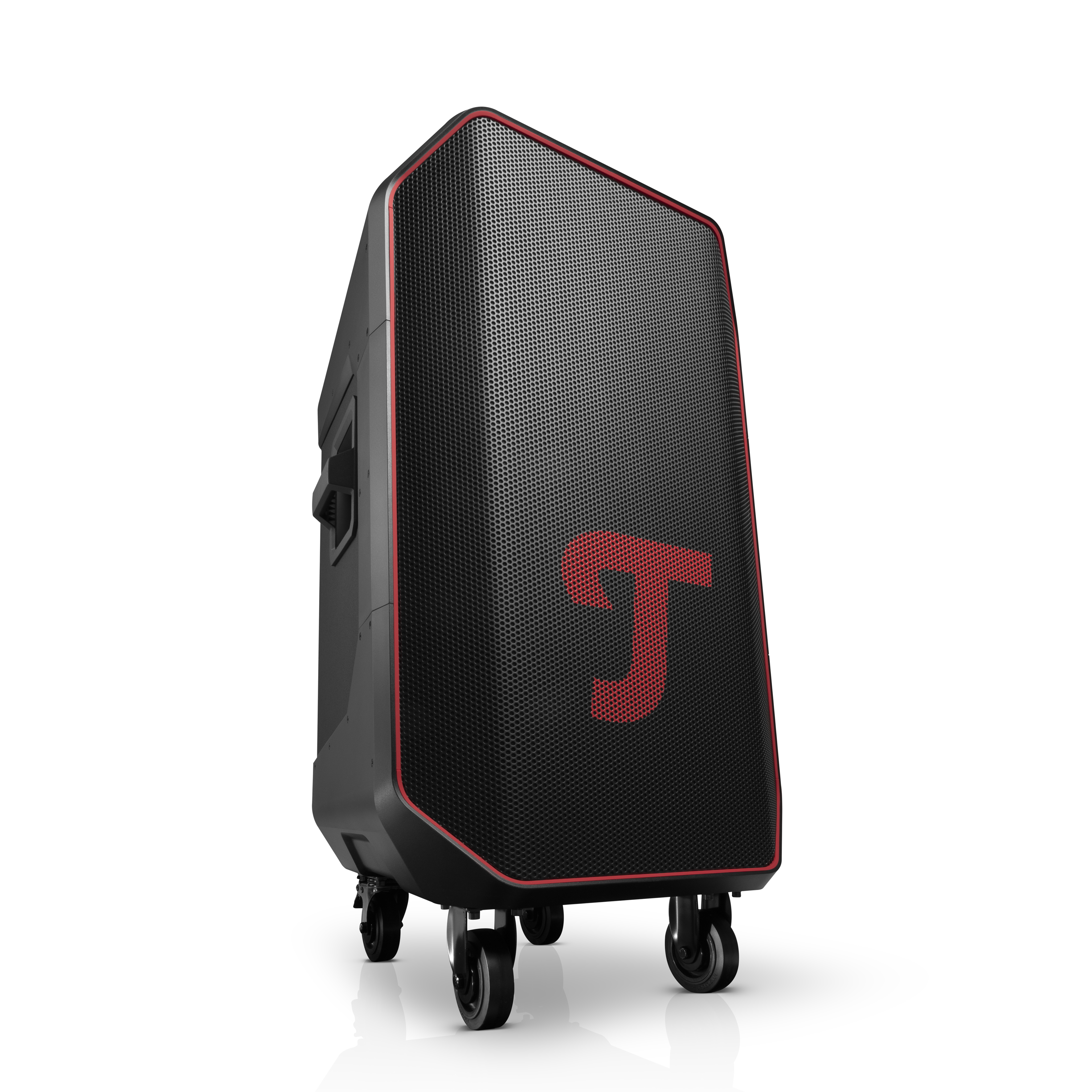
ROCKSTER 2
1199,99 €More Bluetooth myths
The claim that Bluetooth headphones are harmful is not the only myth surrounding Bluetooth – here’s a selection of other common claims about this transmission standard:
- Bluetooth can’t transmit through walls: This myth likely stems from the limited range of a Bluetooth connection. Thick walls can indeed be an obstacle and may impair connection quality. But the connection doesn’t immediately drop as soon as you step behind a wall. What matters much more with Bluetooth is the distance between the paired devices.
- You can’t use Bluetooth and Wi-Fi at the same time: Both transmission methods do indeed use the same radio frequency band to send data. However, this frequency band includes multiple channels that can be used by Bluetooth and Wi-Fi. The technologies have become smart enough to constantly search for a free frequency and switch back and forth if things get crowded somewhere. So you can comfortably use Bluetooth and Wi-Fi at the same time without worrying about interference.
- Bluetooth constantly drains battery power: In the early days, Bluetooth did indeed drain your phone’s battery quite noticeably. Fortunately, technology evolves. With newer Bluetooth versions (we’re currently at Bluetooth 5), you don’t need to worry about a permanently active Bluetooth connection draining your battery. For example, if your smartphone is paired with your in-ear headphones, battery power is only used when establishing the connection and when playing music. If the headphones are silent, the Bluetooth connection is idle as well.
Bluetooth headphones for carefree music enjoyment
▶ SUPREME INOpens in new tab: The top-of-the-line in-ear headphones give you complete freedom and look great too. Whether you’re jogging, relaxing, or just watching Netflix on your laptop: they offer flexible wearing options, up to 16 hours of battery life, an in-line remote for music control and calls, and of course powerful sound with silky highs and tight bass.
▶ SUPREME ONOpens in new tab: Listen to music wirelessly and completely carefree – on the sofa or on your way to work. Thanks to its particularly low weight, the SUPREME ON is barely noticeable and remains very comfortable to wear even over long periods of time – also thanks to its wonderfully clear sound reproduction. This is because the SUPREME ON features Bluetooth aptX for the best sound quality.
More headphones from Teufel
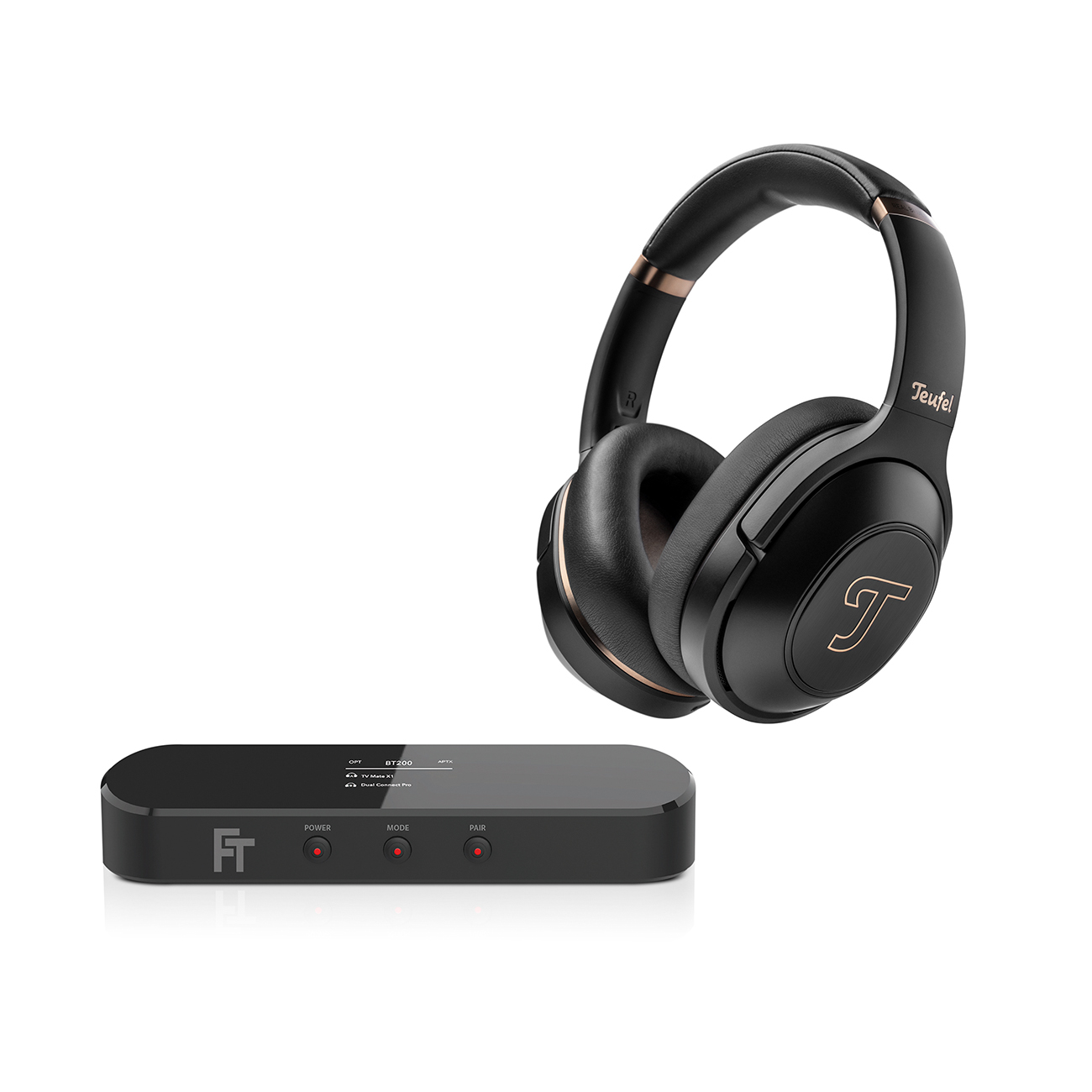
REAL BLUE PRO + FeinTech BT200 Bluetooth Audio Transmitter
349,99 €
AIRY SPORTS TWS 2
99,99 €
REAL BLUE PRO
299,99 €Conclusion: radiation from Bluetooth headphones is not harmful
- Manufacturers of Bluetooth devices must comply with specific maximum limits for emitted electromagnetic radiation.
- The Bluetooth radiation emitted by headphones is so low that it is completely harmless.
- You’re exposed to more radiation when you hold your phone to your ear than when you listen to music with in-ear headphones.
Audioblog
The podcast has been automatically generated by AI, but the content comes directly from an article written by our own editorial team. This ensures the quality remains high and allows you to hear our story in a new format.


Leave a Reply