
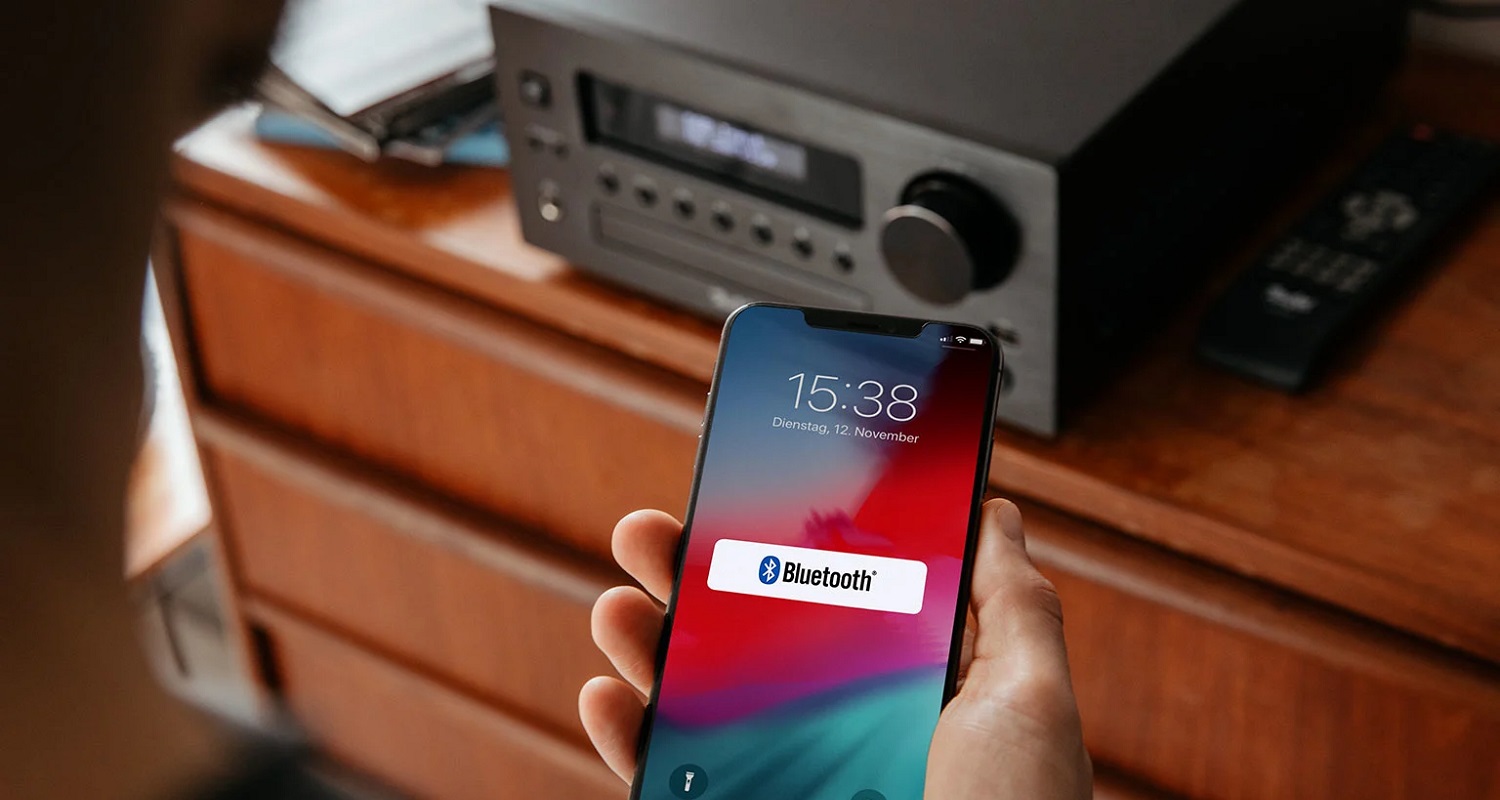

Bluetooth has meanwhile become the standard when it comes to directly connecting mobile or portable devices wirelessly. Thanks to Bluetooth, computers, smartphones, and tablets as well as peripheral devices like keyboards and mice communicate wirelessly – and audio signals are also transmitted via Bluetooth to speakers and headphones. There are, however, differences between various Bluetooth devices. Below, we explain why this wireless standard holds such a dominant position and what innovations exist in the world of Bluetooth.
The Bluetooth project: one standard for all manufacturers
No question: audio cables and USB cables have their place. But sometimes they’re simply annoying. Luckily, there’s Bluetooth! This wireless standard connects devices such as PCs, keyboards, smartphones, headphones, or speakers over short distances – regardless of the manufacturer. We owe this interoperability to the Bluetooth Special Interest Group (SIG), which drove the development of this wireless technology in the late 1990s. Founding members of the SIG included Ericsson, IBM, Intel, Nokia, and Toshiba. Today, the interest group includes more than 34,000 companies. This makes Bluetooth, alongside Wi-Fi, the most important wireless standard.
The name “Bluetooth” is a tribute to the Danish king Harald Bluetooth, who in the 10th century also managed to unite the rival kingdoms of Denmark and Norway through skillful diplomacy. His initials (HB) can be seen as ancient Nordic runes in the Bluetooth logo. The naming was influenced by the key involvement of the Swedish manufacturer Ericsson.
What are the advantages of Bluetooth?
A Bluetooth wireless connection is characterized above all by high stability, a comparatively high transmission speed, and low energy consumption. In addition – unlike infrared, for example – no line of sight between devices is required; similar to Wi-Fi, transmission even works through walls. However, Bluetooth is primarily limited to the short range, especially for audio data. For this purpose, though, the wireless standard is ideally suited.
Reading tip: You can find out when audio streaming via Wi-Fi or Bluetooth makes sense elsewhere on our blog.
Unlike Wi-Fi, no additional network device (router) is required to connect two devices via Bluetooth. It’s enough for both the Bluetooth transmitter and receiver to be present. This makes the wireless connection direct and easy to establish.
 Opens in new tab
How far the Bluetooth signal reaches depends, among other things, on the design of the respective devices and the specific environment. With the Low Energy profile of Bluetooth 5 , purely theoretical ranges of up to 200 meters are possible. For audio streams, the range is usually reduced to around 10 meters due to the significantly larger data volume. Obstacles such as walls significantly affect the range of radio waves regardless of the application.
The range also depends on which class the respective Bluetooth device belongs to. There are three different ones: Class 1 with 100 mW transmission power, Class 2 with 25 mW, and Class 3 with 1 mW. The more compact the device, the lower the power – and therefore the class – tends to be. Bluetooth headphones usually belong to Class 2, with a range of about 10 meters. Notebooks and other devices with higher transmission power are assigned to Class 1.
Bluetooth was developed as an energy-efficient wireless standard. Therefore, power consumption increases only minimally with an active Bluetooth connection. Tests with smartphones from different manufacturers have shown that the wireless connection accounts for only a very small share of battery consumption. So there’s hardly any benefit to switching off Bluetooth to save power.
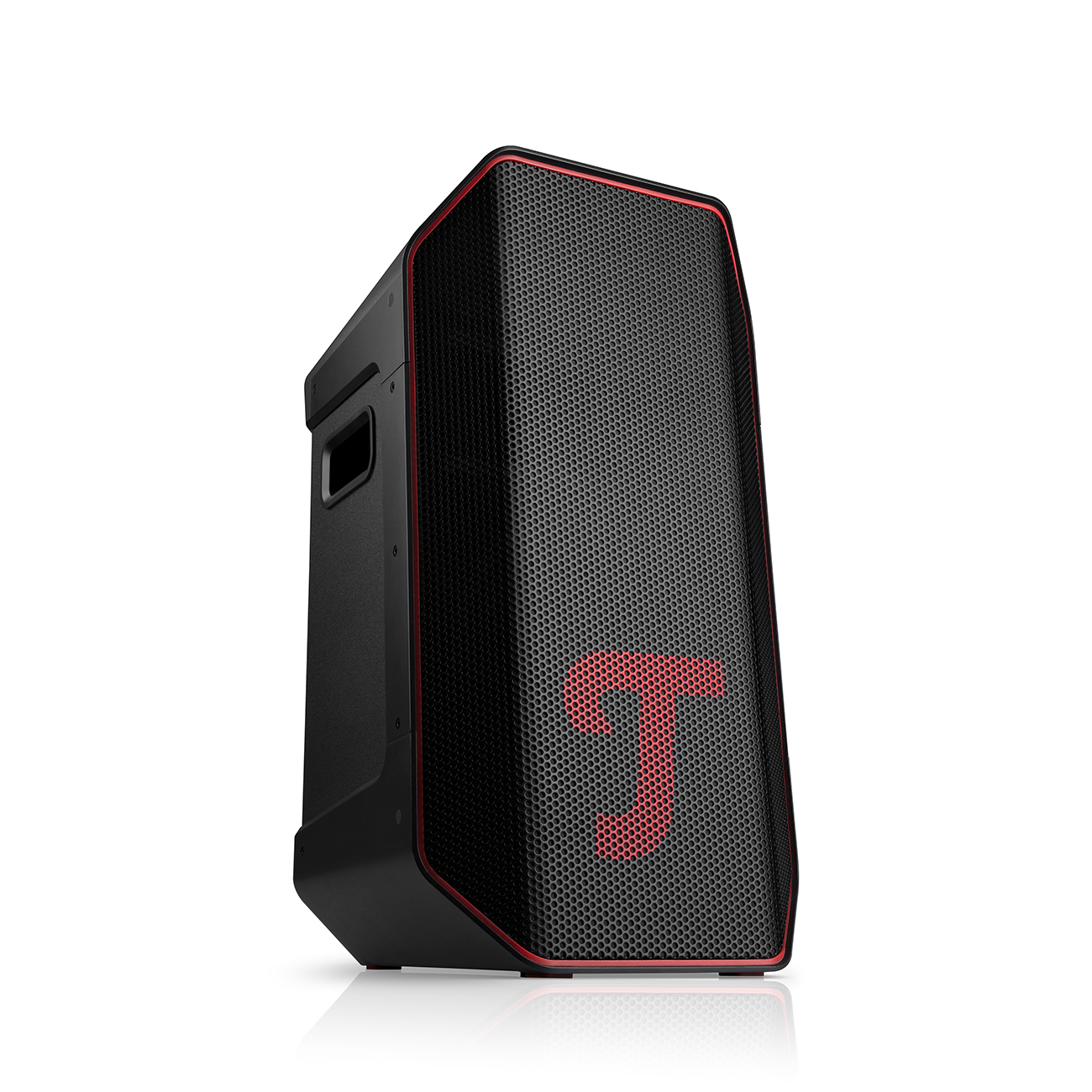
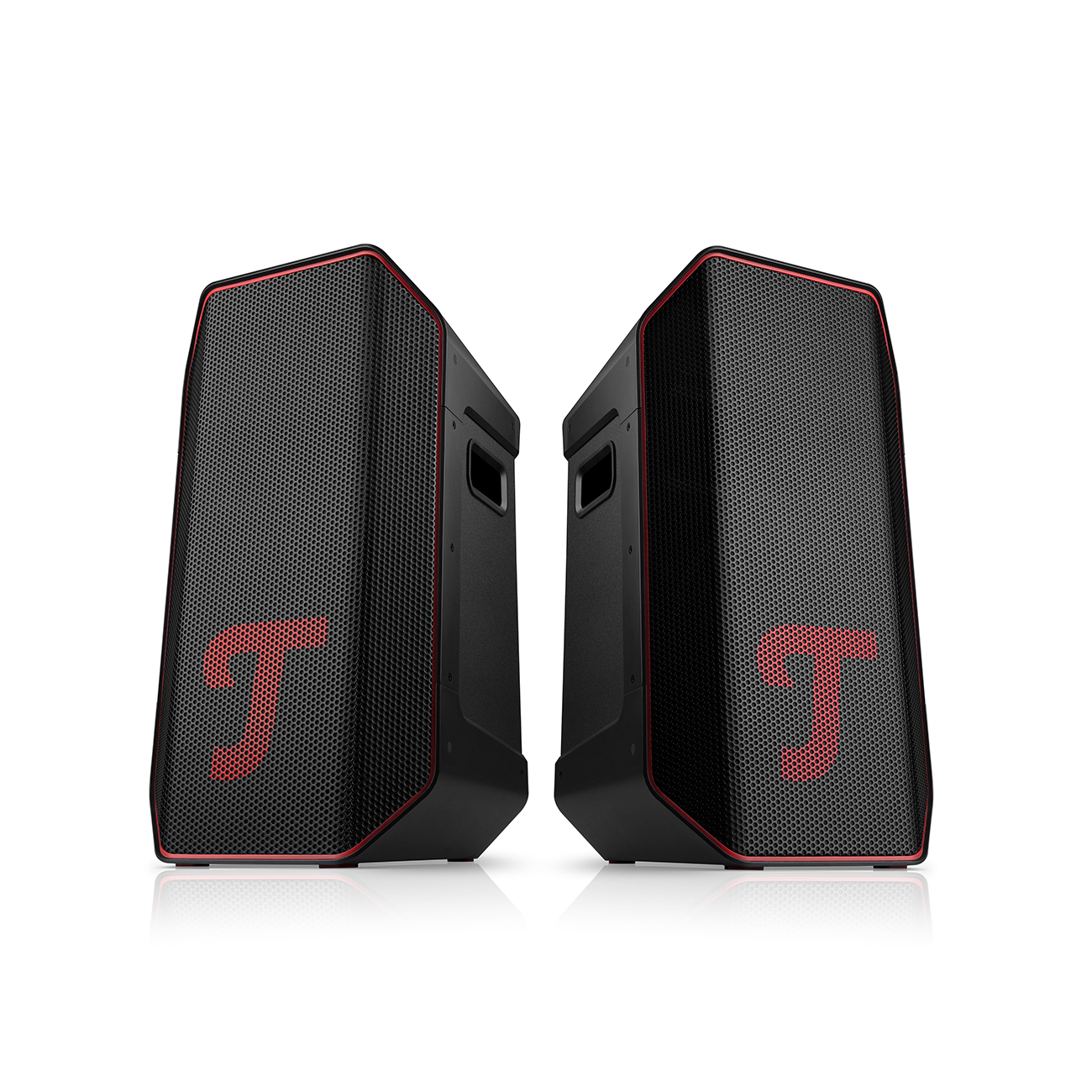
The Bluetooth ROCKSTER from Teufel

The advantages of Bluetooth for audio streaming
That Bluetooth and audio streaming are a great match is confirmed by anyone who has ever connected their smartphone to headphones or a wireless speaker via Bluetooth. Since increasingly better audio compression options have become available, sound quality has also improved: anyone transmitting audio data wirelessly no longer has to compromise on sound quality. This is mainly thanks to the aptX® codec.
With Bluetooth headphones, not only are tangled cables and broken wires a thing of the past, they also offer a completely new level of freedom of movement compared to wired models – for example when jogging with headphones.
Bluetooth headphones receive their audio signals via wireless data transmission. To enjoy all the benefits of a wireless connection between the headphones and the audio source (e.g. smartphone, notebook, hi-fi system), it’s best if both sides communicate using the same Bluetooth standard. Also note that audio transmission often works in only one direction, usually to the Bluetooth headphones as receivers. You can also learn on our blog how to connect Bluetooth headphones to your TV.
Bluetooth radiation is not dangerous. Conventional Bluetooth devices emit only very low levels of electromagnetic radiation, which are well below the prescribed limit values. Here we explain why Bluetooth headphones are not unhealthy.
 Opens in new tab

Leave a Reply