
Big room, big speakers, while small speakers are enough for a small room? It’s not quite that simple. While room size provides important guidance when buying speakers, square metres alone do not determine good sound. Room volume, listening distance, desired volume, expectations regarding bass performance and speaker placement all play a role. We show you what really matters.
Why room size matters when buying speakers
Speakers need to generate sufficient sound pressure at the listening position for music to sound dynamic and balanced. The greater the listening distance and the higher the volume levels you want to achieve, the more headroom your sound system should offer.
However, this does not automatically mean that a large room requires large speakers. If you sit only two metres away from your speakers in a spacious living room, a good pair of bookshelf speakers may be perfectly adequate. If your sofa is five metres away, however, the requirements increase, even if the room itself is not particularly large.
Room size is therefore a useful starting point, but it should not be the sole criterion when choosing speakers.
Square metres alone are not enough: room volume and proportions
There is another factor to consider: when we talk about “room size”, we usually think first of the floor area. Acoustically, however, the third dimension also plays a part.
A 25 m² living room with a ceiling height of 2.40 metres has a volume of approximately 60 m³. A room with the same floor area but with a mezzanine or particularly high ceiling may contain more than twice as much air volume. Sound therefore spreads differently in each space.
The ratio between length, width and height is also important. Rooms with identical or very similar dimensions can be particularly challenging acoustically because certain resonances overlap.
How room size affects bass
The room has a particularly noticeable effect at low frequencies. Bass has very long wavelengths. These sound waves hit the walls, floor and ceiling, are reflected and then overlap with the direct sound from the speaker.
As a result, frequencies can reinforce or cancel each other out. This is why the bass may boom on the sofa while sounding considerably thinner just one metre away.
What are room modes?
These resonances are known as room modes. Put simply, they occur when a sound wavelength corresponds to the dimensions of the room and forms a standing wave between its boundary surfaces.
For example, if a room is four metres long, its first axial mode along this dimension is approximately 43 Hz. This is precisely within a frequency range in which music and film soundtracks can deliver considerable low-end impact.
Smaller rooms are therefore not automatically worse, but the predominant room modes can make it more challenging to produce rich bass. We explain how to position your subwoofer effectively in the article “How to position your subwoofer correctly”.
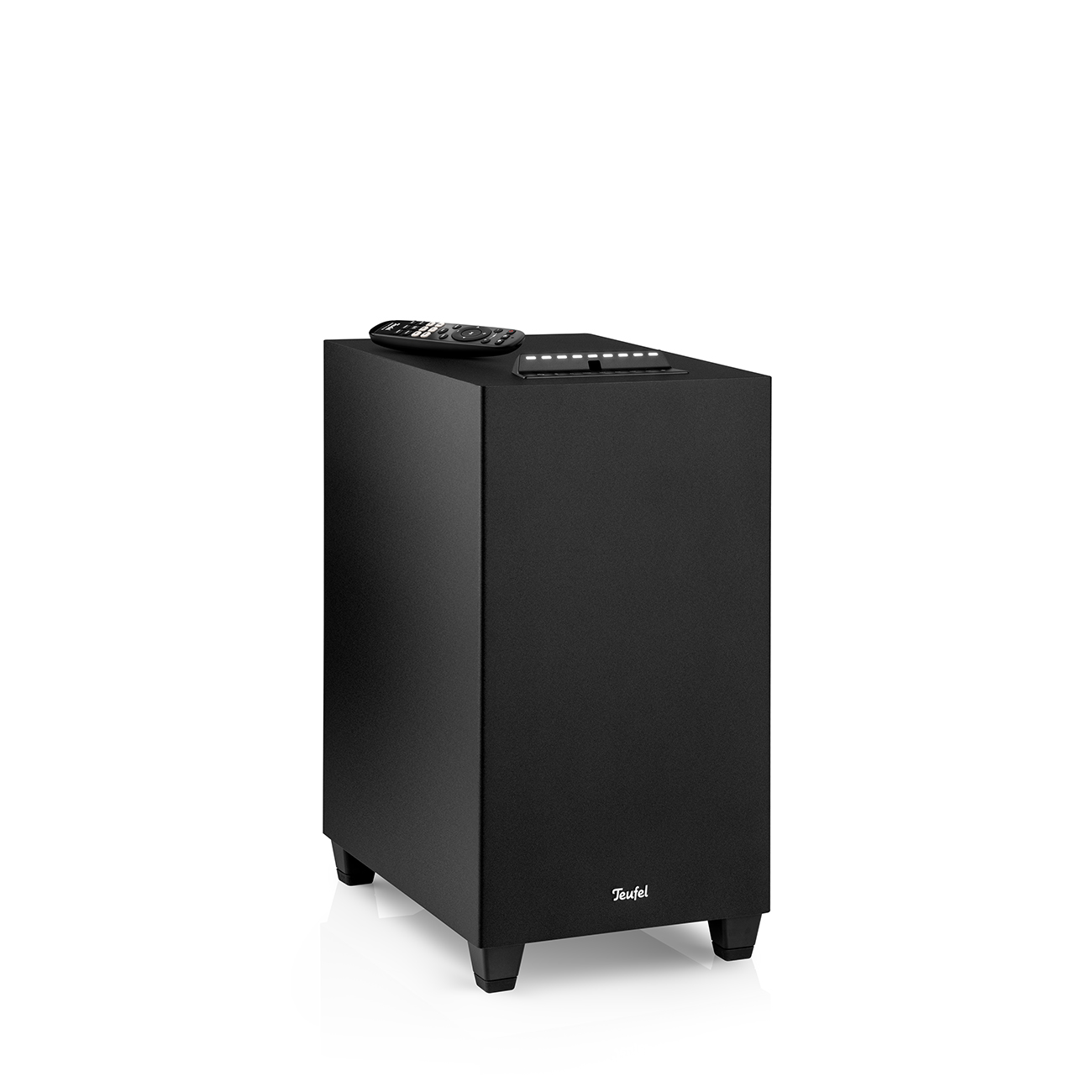
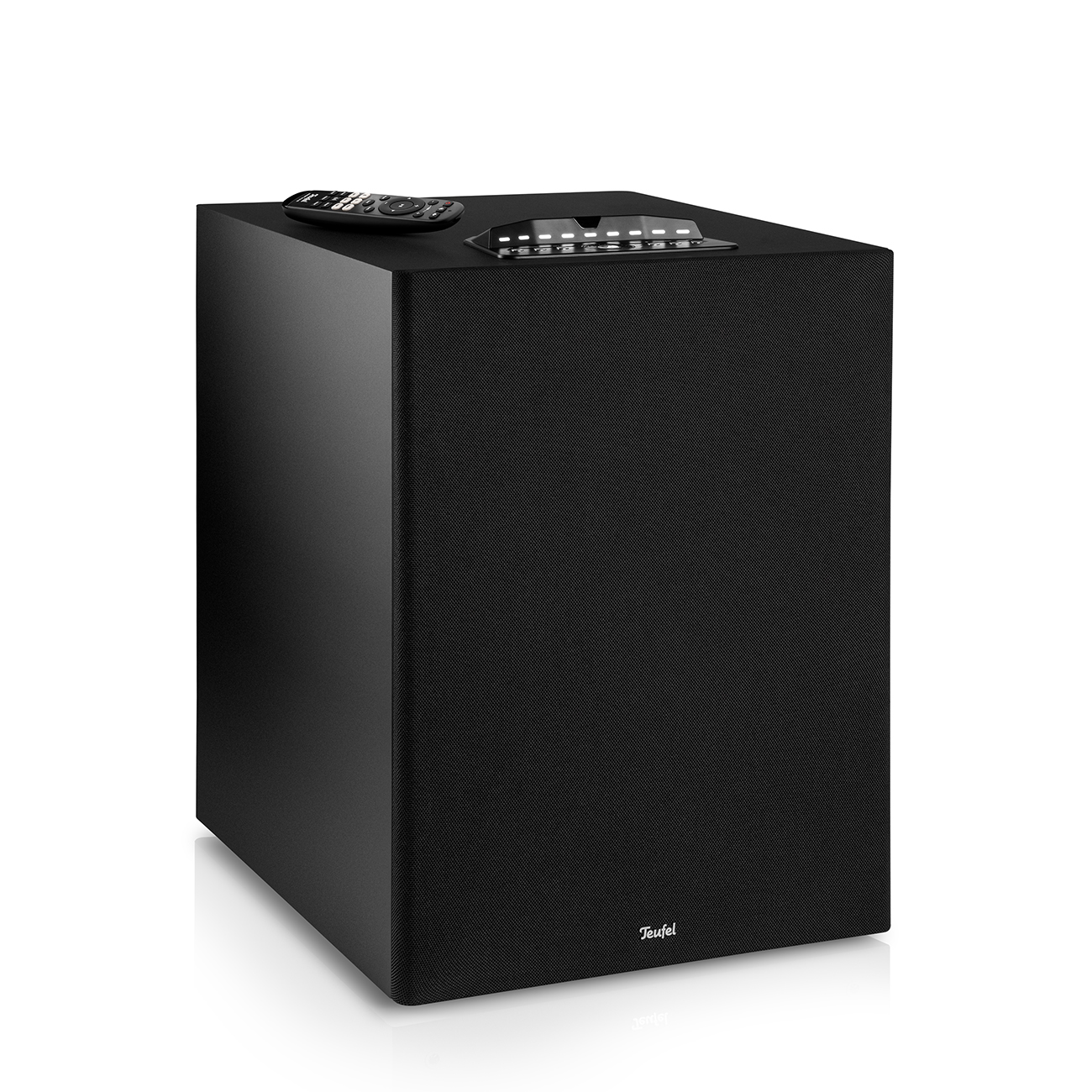
Subwoofers from Teufel
Speakers, watts and room size: how are they connected?
At this point, we need to dispel a myth. Wattage alone does not tell you whether a speaker is suitable for the size of your room. Depending on the specification, it primarily describes the electrical output of an amplifier or the power handling capacity of a speaker, not necessarily the volume it can achieve.
Other factors include efficiency or sensitivity, cone area, listening distance and the desired volume level. An efficient speaker can play very loudly with relatively little amplifier power, while a less efficient speaker requires significantly more power to produce the same sound pressure level.
What is more, additional watts do not lead to a proportional increase in volume. Under idealised conditions, doubling the amplifier power increases the sound pressure level by only around 3 dB. At the same time, the sound level drops noticeably as the listening distance increases.
For a large room or a listening position far away from the speakers, sufficient power reserves and suitable speakers are therefore more important than simply choosing the highest possible wattage.
Which speakers are suitable for which room?
Do you primarily want to know which speakers might be suitable for your living room? You can start by using the room size as a guide. The following values are not fixed limits, but they provide a useful starting point:
| Room size | A sensible speaker size |
|---|---|
| up to approx. 15 m² | Compact speakers or a powerful all-in-one speaker are often sufficient. You don’t need huge volume reserves, especially when listening from a short distance. |
| approx. 15 to 25 m² | Good compact speakers are often a suitable stereo solution. If you want plenty of bass or higher volumes, smaller floor-standing speakers are also an option. |
| approx. 25 to 35 m² | Powerful compact speakers can still do the job. Floor-standing speakers, however, offer greater headroom in terms of volume and deep bass. |
| from approx. 35 m² | Floor-standing speakers are often the obvious choice. For large listening distances, home cinema set-ups or if you want a strong bass response, a subwoofer may also be a good idea. |
Three questions to help you find the right size
To refine the recommendation, you should also consider the following points:
- How great is your listening distance? The farther away you sit from the speakers, the more headroom you are likely to need.
- How loudly do you want to listen? Your system needs less headroom for background music than it does for loud music or home cinema.
- How important is deep bass to you? If you want to physically feel low frequencies, larger woofers or an additional subwoofer are likely to be worthwhile.
As previously mentioned, ceiling height also plays an important role in planning. From an acoustic perspective, a living room with a floor area of 25 m² and a standard ceiling height presents different challenges than an open-plan room with a mezzanine. With very high ceilings, open-plan living spaces, a large listening distance or demanding bass requirements, it may be advisable to choose the next performance level up.
The following principle applies: large speakers are not automatically too large for small rooms, and small speakers are not automatically unsuitable for large rooms. What matters is always the interplay between the room, listening distance, desired volume level and placement. Our detailed guide to speaker placement explains what you need to consider.
Guidance for choosing speakers
Whether you choose a compact active speaker, a traditional passive hi-fi setup or a flexible Wi-Fi speaker, the right solution for you depends on more than just room size. How you want to listen, how much space is available and whether an amplifier and source devices are already available are also important. These three models demonstrate how different a suitable setup can look.
 Opens in new tab
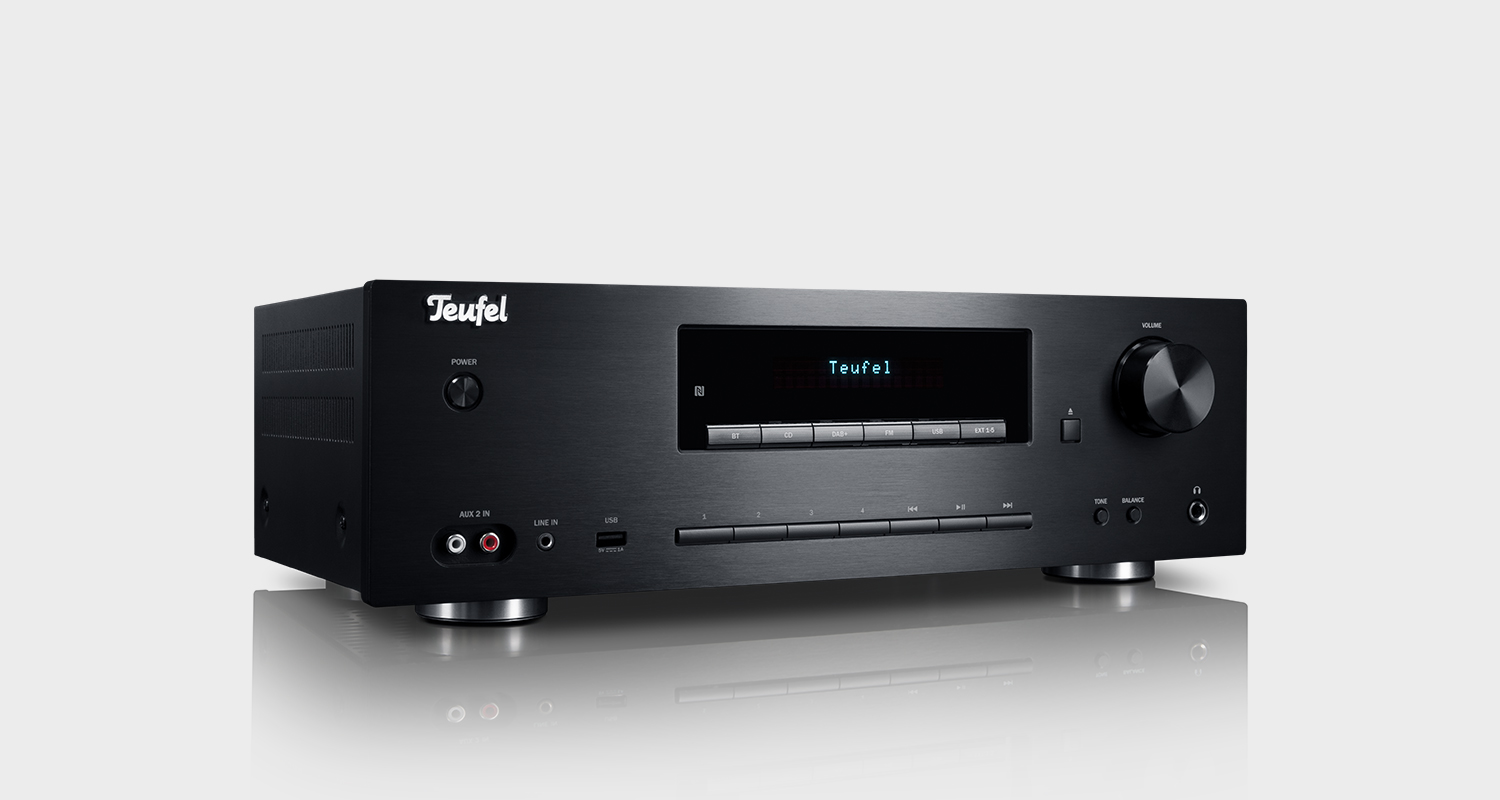
▶ ULTIMA 25 ACTIVE 2Opens in new tab: The active speaker pairOpens in new tab already includes the amplifier/AV receiver. With 2 × 50 watts RMS, it is designed for rooms of up to 30 m². TVs, computers and other sources can be connected directly via HDMI ARC, optical input, USB-C or Bluetooth. This makes the ULTIMA 25 AKTIV particularly suitable if you are looking for a space-saving stereo setup without a separate amplifier.
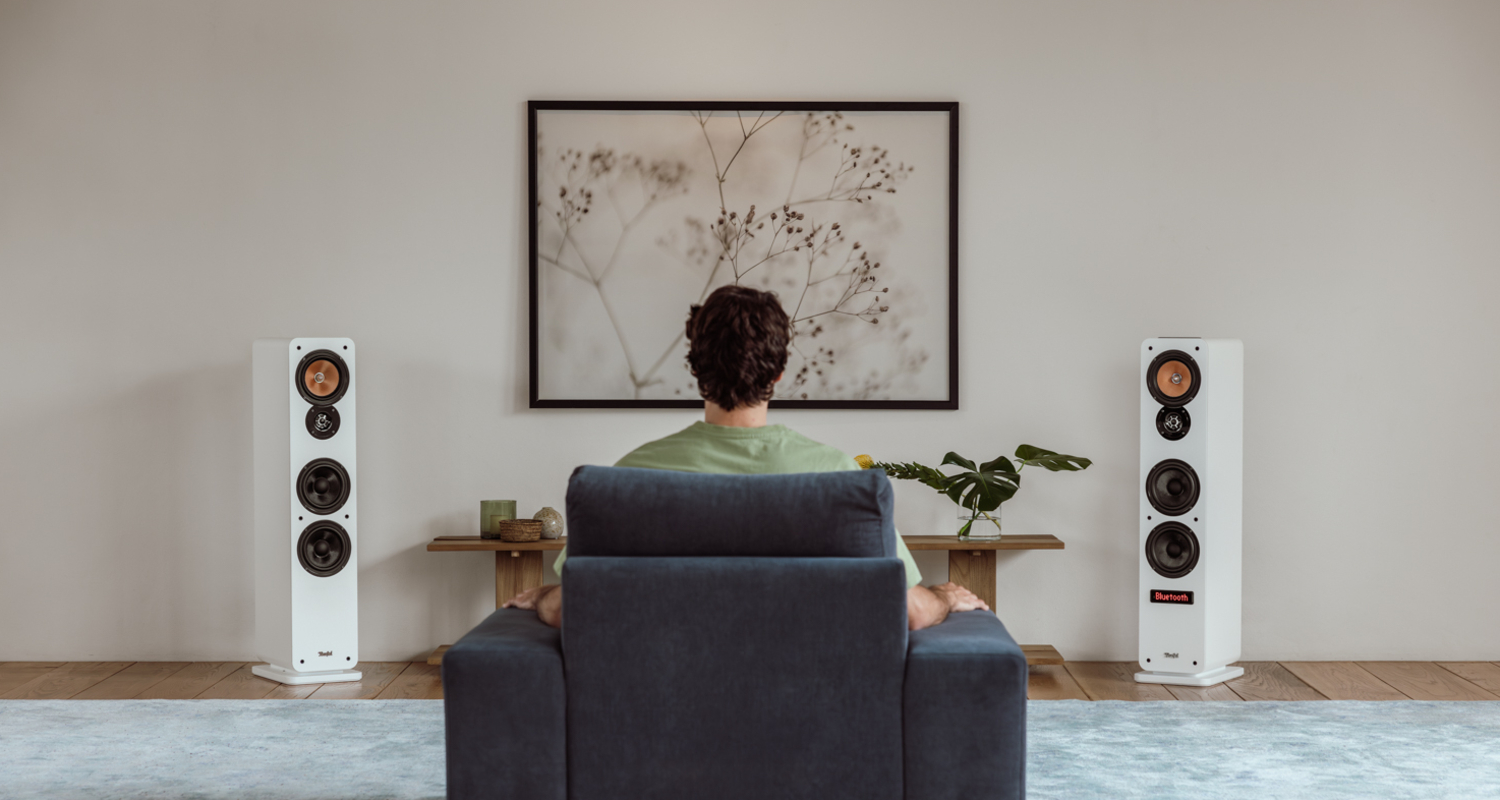
▶ ULTIMA 40Opens in new tab: If you already have an amplifier or AV receiver, a passive systemOpens in new tab may be an option. The ULTIMA 40 is a three-way floorstanding speaker with two woofers per speaker and is recommended for rooms of up to 35 m². The larger cone area and cabinet provide headroom for powerful bass and higher volume levels. In even larger rooms, the system can also be expanded with a subwoofer.
▶ MOTIV® HOMEOpens in new tab: If you want to play music flexibly around the room, a wireless speaker Opens in new tabis an alternative to a traditional stereo setup. The compact all-in-one system supports streaming via AirPlay 2, Google Cast and Wi-Fi, among other options. It also supports Bluetooth and can easily be moved around the home thanks to its integrated battery. With its 2.1 system and 70 watts RMS, it combines a small footprint with a fully featured streaming solution.
Small speakers from the Teufel shop
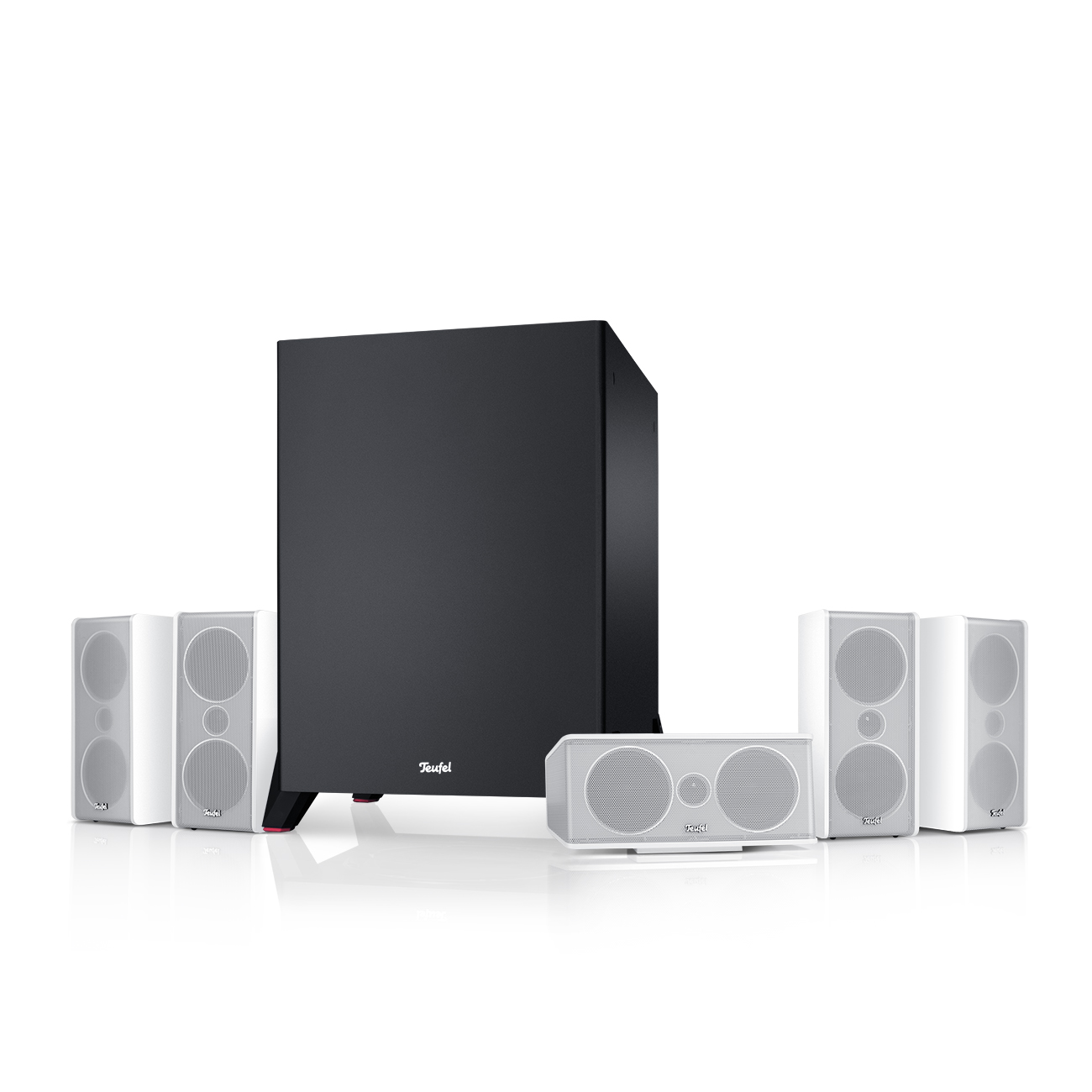
CONSONO 35 Mk3 Power Edition "5.1-Set"
449,99 €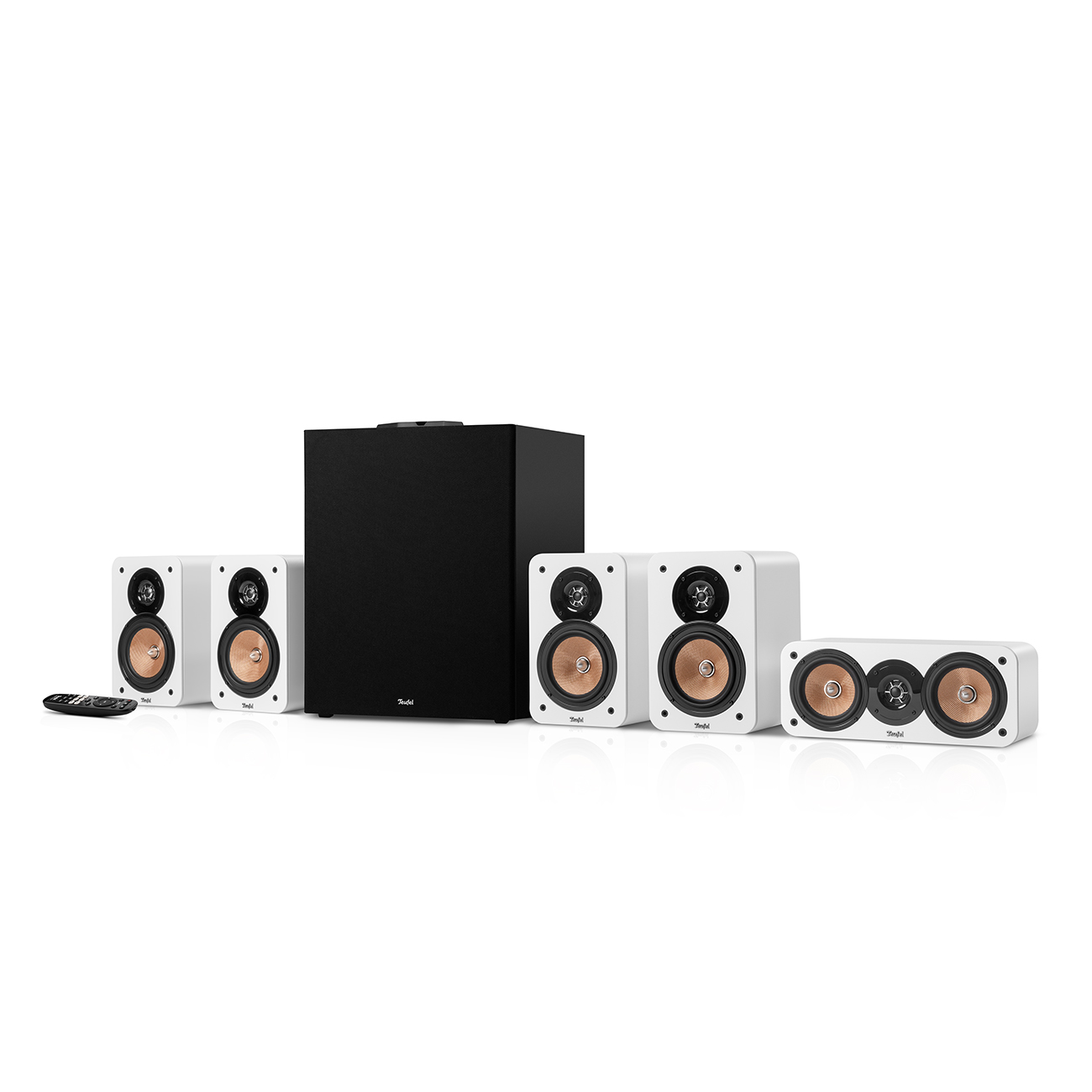
ULTIMA 20 CONCEPT Surround Power Edition "5.1-Set"
749,99 €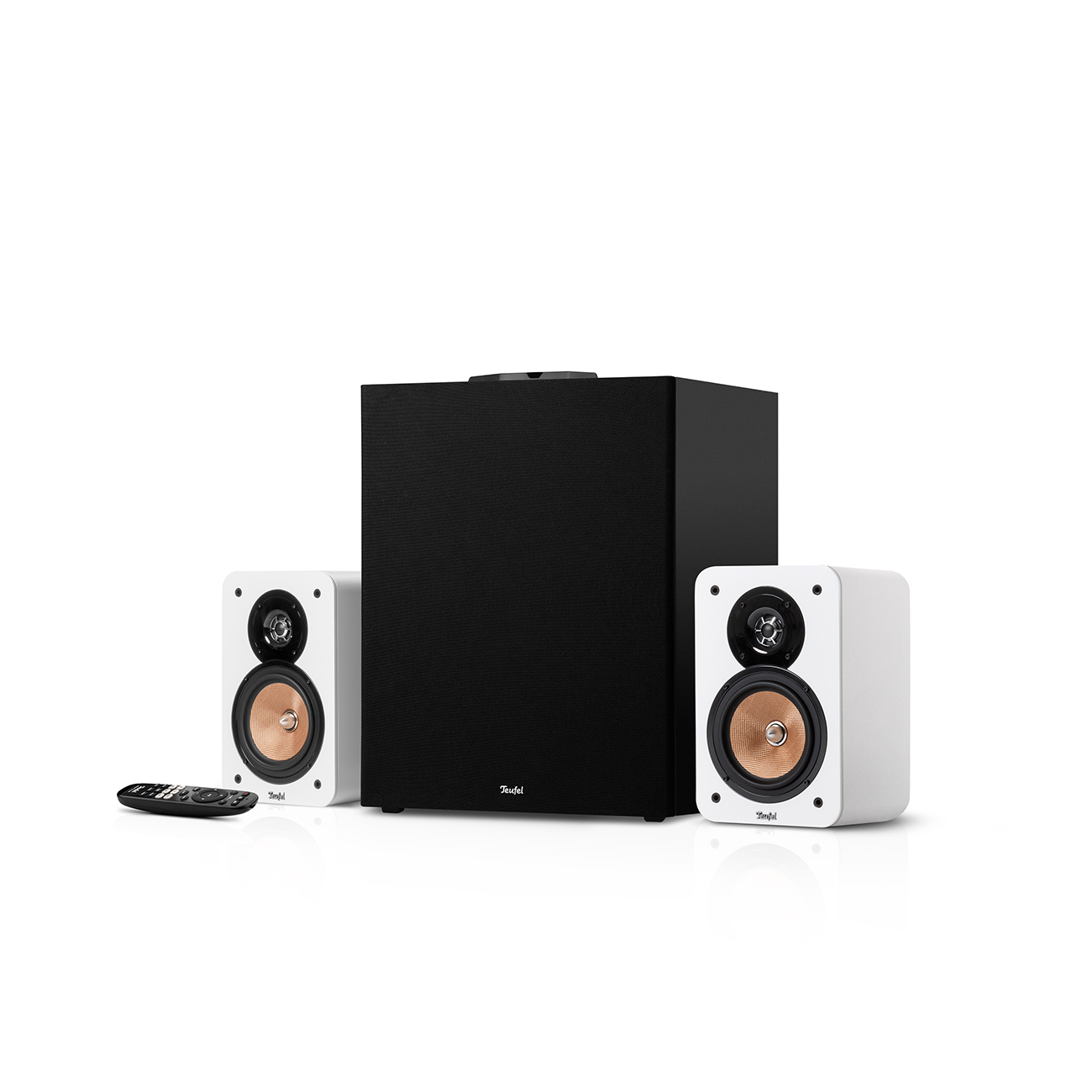
ULTIMA 20 CONCEPT Power Edition "2.1-Set"
549,99 €Conclusion: room size is important, but it is not everything
- The number of square metres provides initial guidance, but it is not enough on its own when choosing speakers.
- Room volume and proportions have a particular effect on bass and room modes.
- Listening distance and the desired volume level also determine how much power reserve is advisable.
- Large speakers can also work in small rooms. Correct placement is crucial.
- Bookshelf speakers can also fill larger rooms. However, smaller systems are more likely to reach their limits at high volume levels and when reproducing a lot of deep bass.
Frequently asked questions (FAQ)
Good bookshelf speakers may already be sufficient for a 20 m² room. The listening distance, desired volume and bass requirements are also important. A rigid recommendation based solely on the number of square metres is therefore of limited value.
Yes. Floorstanding speakers can also work well in smaller rooms. It is important to have sufficient placement options and bass performance suited to the room.
In principle, yes. However, with a large listening distance, high volume levels or particularly powerful deep bass, larger speakers or an additional subwoofer may offer more headroom.
There is no universal distance. The speaker design, room and listening position determine the ideal placement. Try out different positions and also follow the manufacturer’s recommendations.
Not necessarily. Powerful floorstanding speakers can already deliver plenty of deep bass. A subwoofer becomes useful if you want particularly low frequencies, high volume levels or pronounced home cinema bass.
The appropriate amplifier power depends not only on the room size, but also on the speaker’s efficiency, the listening distance and the desired volume. An efficient speaker can achieve high volume levels with comparatively little power, while another model may require significantly more watts. However, greater power reserves are advisable in larger rooms and when the listening position is farther away from the speaker.