
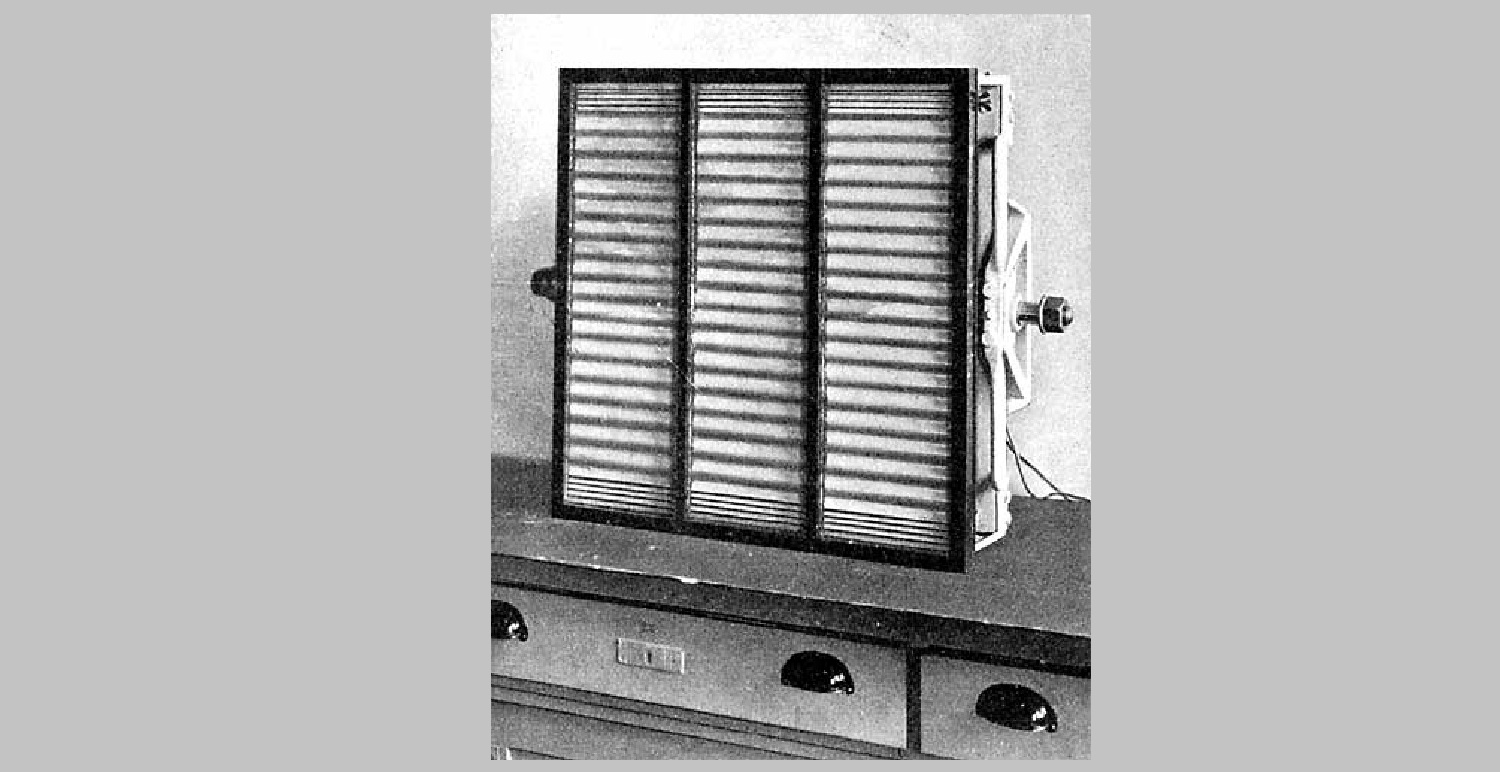

In 1925, the first electrodynamic loudspeaker was unveiled to the public at IFA Berlin. Known as the Blatthaller (pictured in the header image), this invention would go on to transform the way we experience sound. Today, loudspeakers are an integral part of everyday life, whether we’re listening at home, enjoying live music or using headphones. To mark 100 years of loudspeaker technology, we’re looking back at the key milestones that shaped its history, celebrating groundbreaking inventions, sharing some fascinating anecdotes and exploring how sound reproduction has evolved over the past century.
A Century of Sound: The Story Behind the Loudspeaker
The story of loudspeaker technology actually begins long before the first speaker was invented. Its roots lie in the development of the telephone, where early sound transducers were designed to make speech audible over a distance. During the 1860s, inventors including Antonio Meucci, Philipp Reis, and Alexander Graham Bell experimented with ways to convert sound into electrical signals and back again. While no single person can claim sole credit for inventing the telephone, Bell is widely associated with its breakthrough, thanks to his successful working model.

In 1878, Werner von Siemens filed a patent for an electrodynamic sound transducer, originally intended for use in telephones. The design relied on a simple but ingenious mechanism: a coil suspended in a magnetic field moves a diaphragm back and forth, producing sound. This remains the basic operating principle behind most modern loudspeakers. What began as a practical solution for transmitting speech would eventually become a cornerstone of audio technology. However, speakers only really came into their own once more powerful amplifiers made it possible to reproduce music and radio broadcasts at a much greater volume.
When Sound Took Centre Stage: The Rise of the Loudspeaker
Around 1925 – a year often regarded as the dawn of the modern loudspeaker. The arrival of commercially viable valve amplifiers finally allowed electrodynamic speakers to demonstrate their full potential. At the first Berlin Radio Exhibition, manufacturers showcased their latest sound-reproduction technology to the public, turning the event into quite a spectacle. It marked a major turning point for audio technology – and Berlin was right at the centre of it.

This marked the beginning of loudspeakers as part of everyday life. For the first time, music, speech and cinema sound could be played back loud and clearly enough for everyone to hear. The enormous horn loudspeakers of the era may look rather unusual by today’s standards, but their size served a purpose: they compensated for the limited output of early amplifiers.
Over the following decades, speakers underwent a major transformation, both in terms of technology and design. The bulky horn loudspeakers of the early days eventually gave way to the first compact sealed speaker enclosures in the 1950s, as amplifier technology became more advanced.
These new designs delivered clearer sound without taking up quite so much space. Meanwhile, open enclosure designs also found their way into the market, attracting high-end audio enthusiasts with their natural sound reproduction, although bass accuracy was often compromised. Some of these pioneering designs can still be seen in exhibitions and loudspeaker museums today – fascinating relics from the early days of audio technology.
From Mono to Stereo: The Evolution of the Listening Experience
For decades, listening to music was a one-dimensional experience, with mono systems reproducing everything through a single audio channel. That began to change in the 1930s, when engineers started exploring stereophonic sound. By using two separate channels, they could create a sense of space and position, making recordings feel far more lifelike. Stereo finally reached the mainstream in the 1950s and 60s, thanks to the arrival of stereo records and compatible playback equipment. It has since become the industry standard, laying the foundations for today’s immersive listening experiences, from home audio systems and car stereos to headphones.
Further reading: Discover the origins of stereo sound and how stereophony changed the way we listen to musicOpens in new tab.

From Basic Horns to Three-Way Speaker Systems
Early loudspeakers were often little more than simple horns, relying on mechanical amplification to make sound audible. The introduction of electrodynamic technology in the 1920s changed everything, opening the door to much more detailed and accurate sound reproduction. Modern three-way speaker systems take this a step further, using dedicated drivers for high, mid and low frequencies to deliver a balanced, highly detailed listening experience. Loudspeakers have come a long way from their purely functional beginnings, evolving into sophisticated audio equipment that combines acoustic engineering with considered design.

Teufel has been part of the audio scene since 1979. What started with DIY speaker kits has grown into a range of complete audio systems that bring high-quality sound within reach of more people. The philosophy remains much the same: impressive performance, fair prices and forward-thinking technology, all developed in Berlin.
The Perfect Addition to Your Setup

Sound Beyond Borders: Speakers at the Berlin Wall
One lesser-known chapter in the history of Berlin’s division dates back to the 1960s, when both East and West used loudspeaker systems along the Berlin Wall to broadcast propaganda across the divide.
- West Berlin broadcast news and music across the border into East Germany.
- East Germany responded with competing broadcasts, using loudspeakers to drown out the messages from the West.
Official Broadcasts, Not DIY: The Loudspeaker Systems at the Berlin Wall
On the western side, loudspeaker broadcasts were organised by the authorities, delivering news and music across the Wall. East Germany responded with its own state-run broadcasts, using competing sound systems to drown out the messages from the West. What might sound like science fiction today was simply part of the sonic battle that played out in the heart of Berlin during the Cold War.
This sonic stand-off, often referred to as the “loudspeaker war”, is a striking reminder that speakers have served purposes far beyond entertainment. They could also be powerful tools of political communication – particularly in a city like Berlin, which Teufel has called home for decades.
The Modern Loudspeaker and What Lies Ahead
Today’s loudspeaker market offers an incredible range of possibilities, from voice-controlled smart speakersOpens in new tab and 360-degrOpens in new tabee sound to multi-room setupsOpens in new tab and weather-resistant models Opens in new tabfor outdoor use. And innovation shows no signs of slowing down. Graphene diaphragms, floating speakers and self-calibrating audio systems are just some of the technologies shaping the next generation of sound.
Still think you’ve seen it all? At CES 2025Opens in new tab, manufacturers unveiled speaker concepts that look more like heating controls but project sound in every direction. The future of audio is certainly taking some unexpected shapes.
Berlin’s Audio Legacy: Teufel Products That Stand the Test of Time
 Opens in new tab
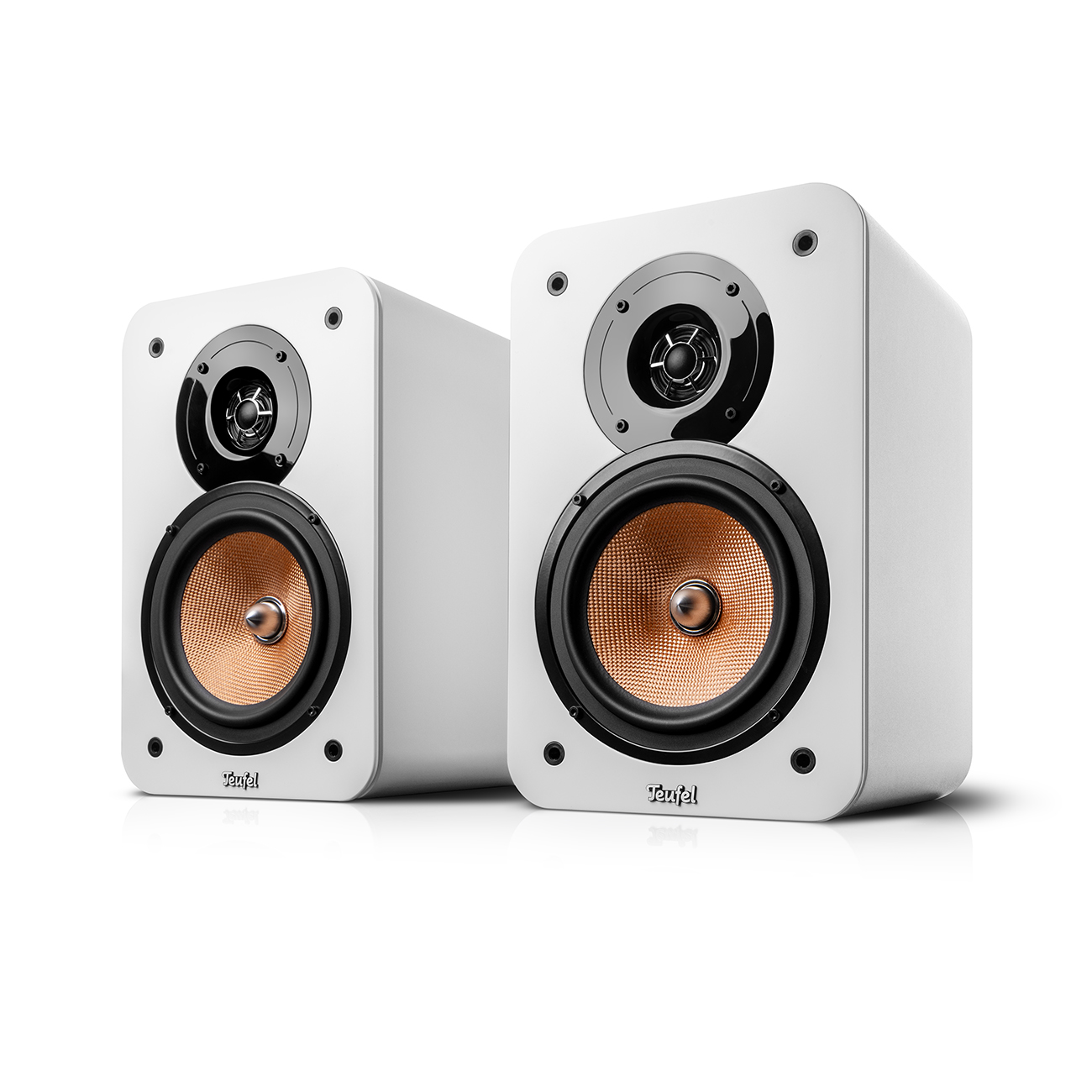
▶ ROCKSTER CROSS 2Opens in new tab: A perfect example of just how far speaker technology has come. What once required enormous horn systems can now be delivered by a compact, rugged Bluetooth speakerOpens in new tab with a long-lasting battery and powerful sound for both indoor and outdoor listening.
▶ ULTIMA 40Opens in new tab: A Berlin-born bestseller and a three-way floorstandingOpens in new tab speaker that has earned its place in audio history. Powerful bass, clear mids and detailed highs, all at an accessible price, have made the ULTIMA 40 a true classic.
More from the Teufel Shop
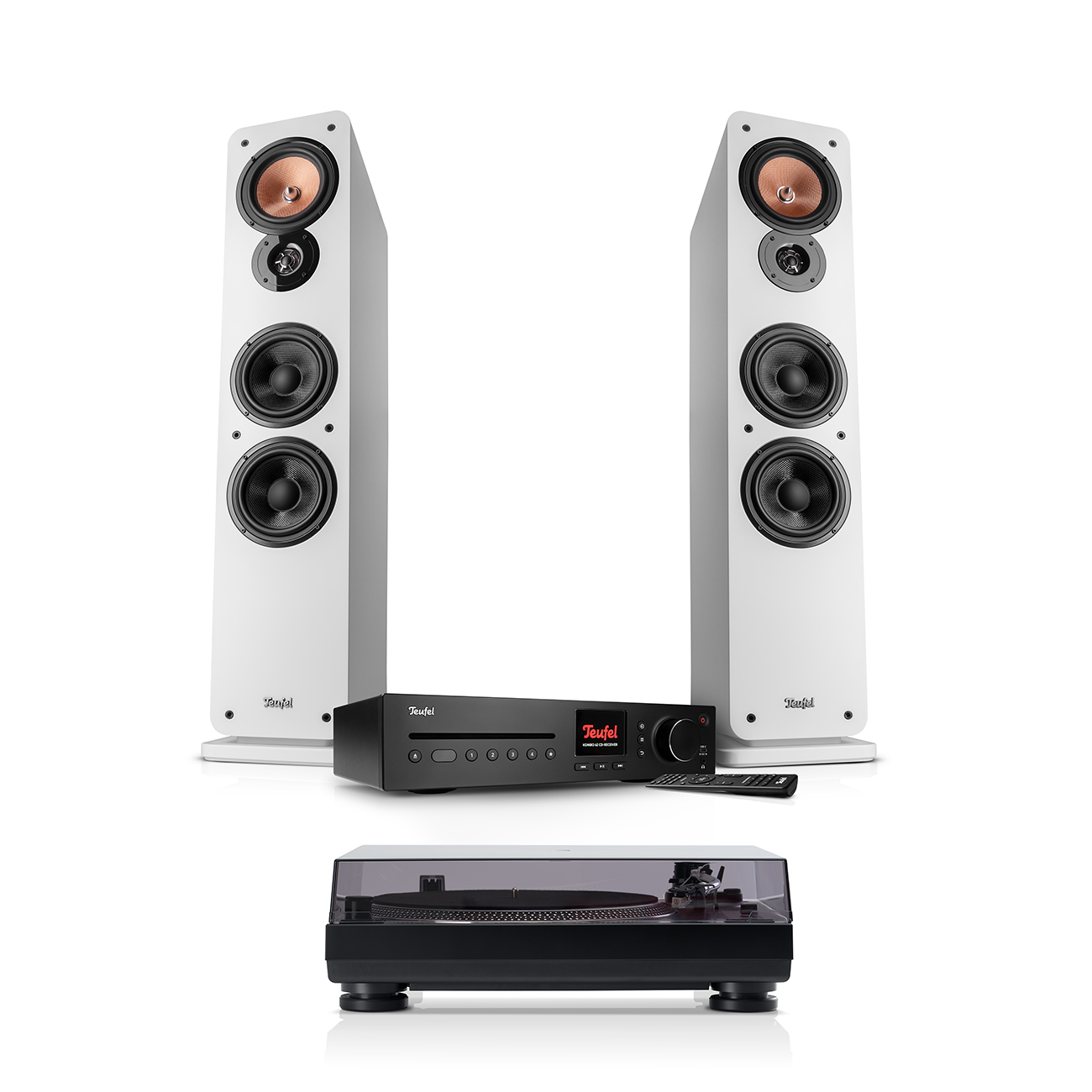
ULTIMA 40 KOMBO 3 + DUAL DT 250
949,99 €
ULTIMA 40 ACTIVE 3 Club Edition
1049,99 €
DEFINION 3
1111,- €100 Years of Loudspeaker Innovation: The Key Takeaways
- The first sound transducers were developed for telephones – music reproduction came later.
- 1925 marked the beginning of the modern loudspeaker as we know it today.
- Speaker design has evolved from enormous horns to sleek, wireless systems.
- Whether in a loudspeaker museum or your own living room, the technology remains fascinating.
- Header image: Blatthaller in MedienstimmenOpens in new tab.
- Image 1: Yaroslav ShuraevOpens in new tab on PexelsOpens in new tab. Pexels LizenzOpens in new tab.
- Image 2: Von Bundesarchiv, image 102-08307 / CC-BY-SA 3.0, CC BY-SA 3.0 de


Leave a Reply