
You’re familiar with the basics of stereo sound: left, right and everything in between. Dolby Atmos Music takes this a step further by adding a sense of three-dimensional space. Instruments, vocals and effects can be positioned not just across the stereo panorama, but also in terms of depth and height. So what exactly happens in an Atmos mix, how does it differ from stereo, and what equipment do you need to experience it? We’ll explain it all here.
What is Dolby Atmos Music?
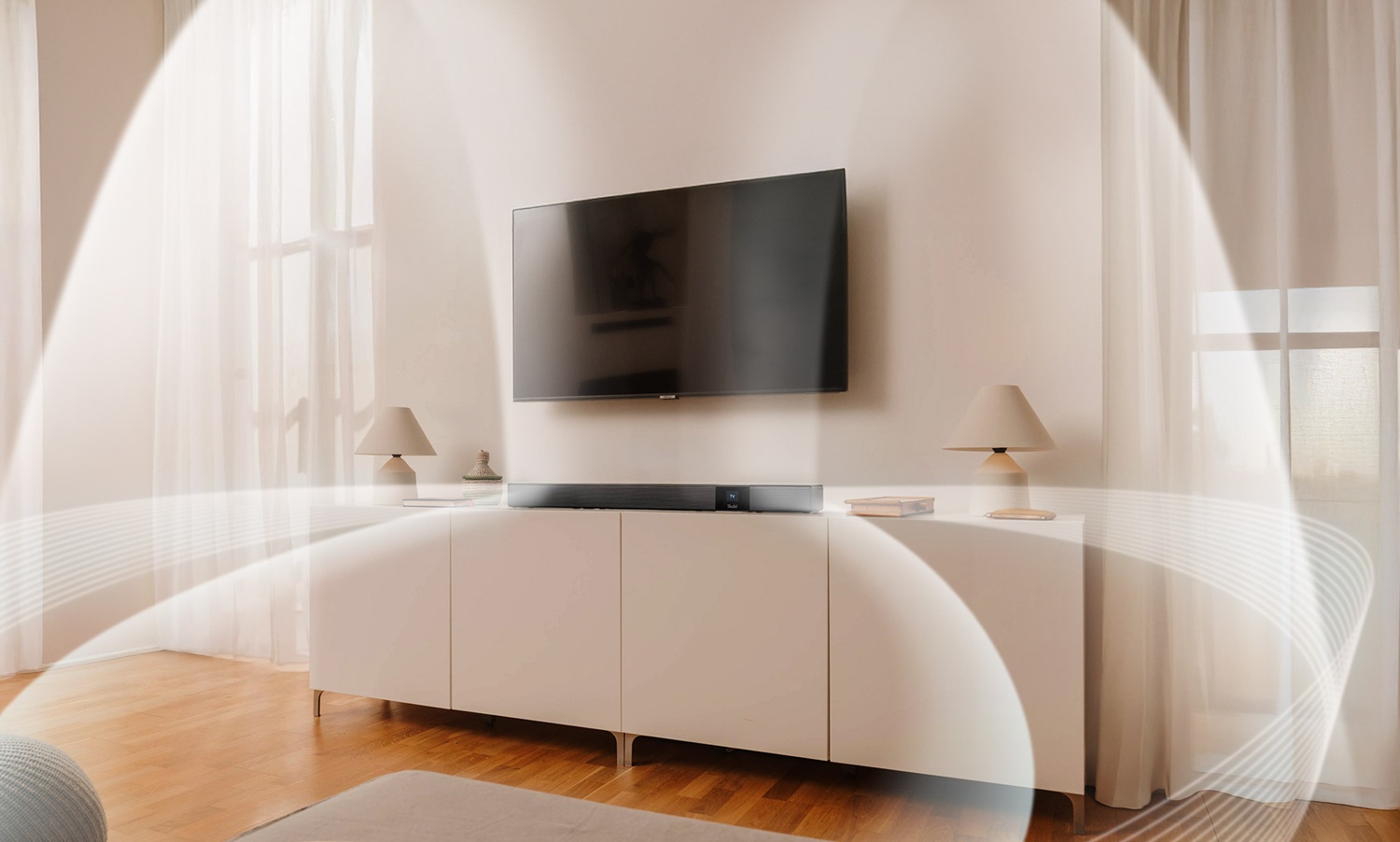
Dolby Atmos Music refers to music produced and mixed in Dolby AtmosOpens in new tab to create a more immersive, three-dimensional listening experience. While a typical stereo mix distributes sound between the left and right channels, Atmos also allows sounds to be positioned in front of, behind or above the listener. Vocals, for example, can be placed directly in front of you, while individual effects can be positioned higher up to create a greater sense of space.
Important: An Atmos mix isn’t automatically better than a well-produced stereo mix.Opens in new tab The quality of the result still depends on the recording, mixing and mastering, as well as, of course, your personal taste.
How does Dolby Atmos Music work?
To understand how the technology works, it helps to take a brief look at the production process. A Dolby Atmos mix can combine a channel-based foundation, known as Beds, with individual audio Objects. The Dolby Atmos Renderer then processes these elements according to the playback setup being used.
- The Bed provides the multichannel foundation of an Atmos mix. In its production workflow, Dolby uses, among other configurations, a 7.1.2 Bed: alongside the conventional surround channels, it adds two height channels. These can be used for larger soundscapes or groups of related signals. However, this refers only to the mixing setup used in the studio and does not mean you need the same speaker configuration at home.
- Audio Objects can be handled independently of fixed speaker channels. A synthesizer, percussion track or sound effect can be positioned at a specific point in the room and even moved around as the song progresses. Additional positional data tells the system exactly where that sound should be placed.
- The Renderer then translates this information for the playback system in use. This means the same Atmos mix can be played back through different speaker configurations or through headphones, depending on the setup.
What do you need to listen to Dolby Atmos Music?
There are several requirements for playing back a Dolby Atmos mix:
- The song must be available in Dolby Atmos.
- The source and playback device must support Dolby Atmos.
- The output must match the playback method being used – for example, through an Atmos-enabled soundbar or headphones.
Compatible smartphones, tablets and computers can all serve as sources. With headphones, an Atmos mix can be rendered binaurally, creating a three-dimensional listening experience through the two headphone channels. You therefore don’t necessarily need special “Dolby Atmos headphones”; what matters is whether Atmos is supported by the device, operating system, app or streaming service you’re using.
In the living room, Dolby Atmos Music can be played through a compatible soundbar or a speaker system paired with a suitable AV receiver. What matters is the entire signal chain: if any component along the way doesn’t support Dolby Atmos, the format cannot reach the playback device as intended.
Further reading: Learn more about Dolby standards in our guide “The Dolby Audio UniverseOpens in new tab”.
Soundbars for immersive sound
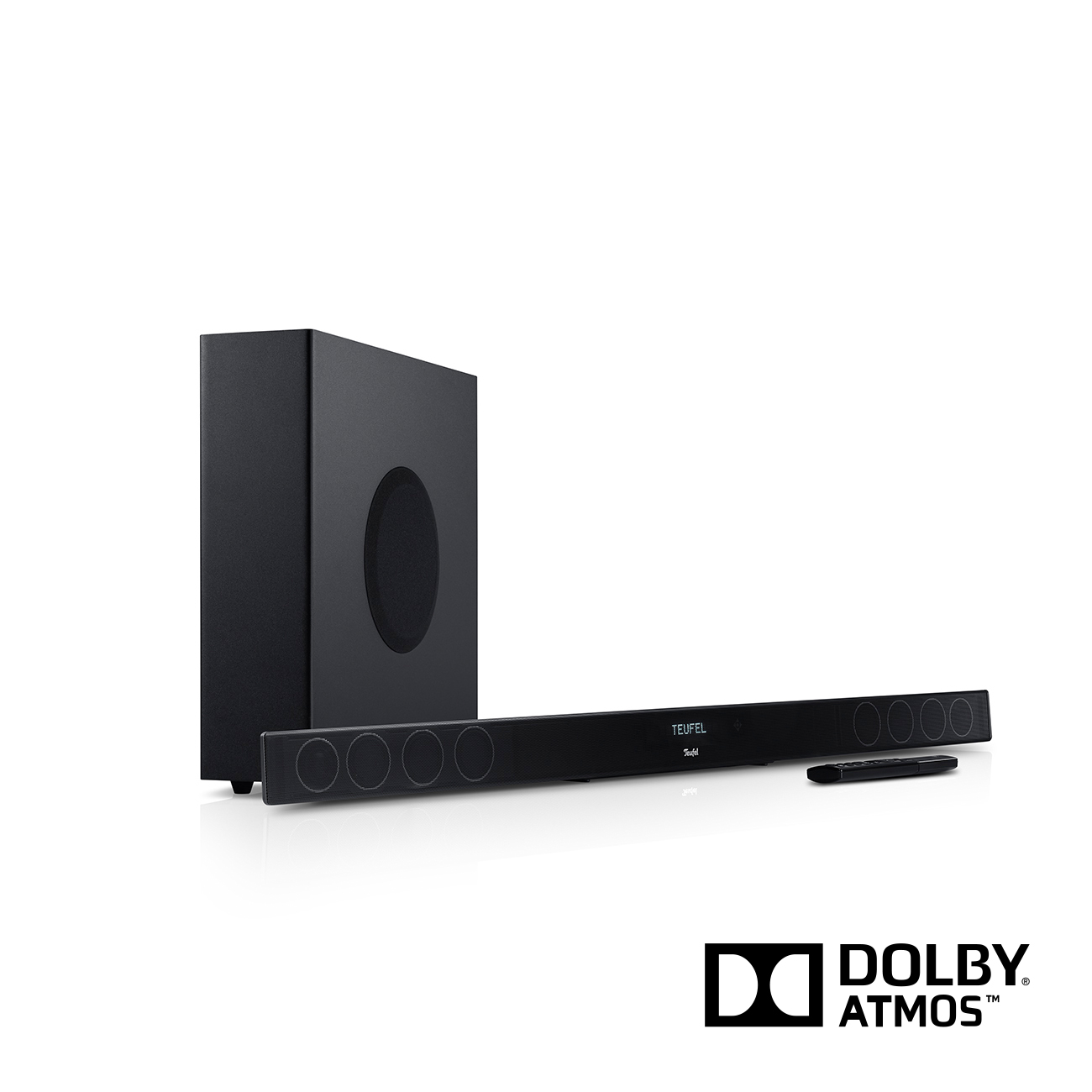
CINEBAR 11 for Dolby Atmos 2.1 Set
319,99 €
Where can you stream Dolby Atmos Music?
Most people today listen to music through streaming services. Dolby currently lists Apple Music, Amazon Music Unlimited and TIDAL as services offering Dolby Atmos Music. However, not every track is available in Atmos. When choosing a song, check the Atmos label and playback settings on your streaming service.
The devices, apps and subscription plans supported vary from one provider to another. If you regularly switch between your smartphone, tablet and TV, it’s worth checking which audio formats the service supports on each device.
Experience Dolby Atmos with Teufel Soundbars
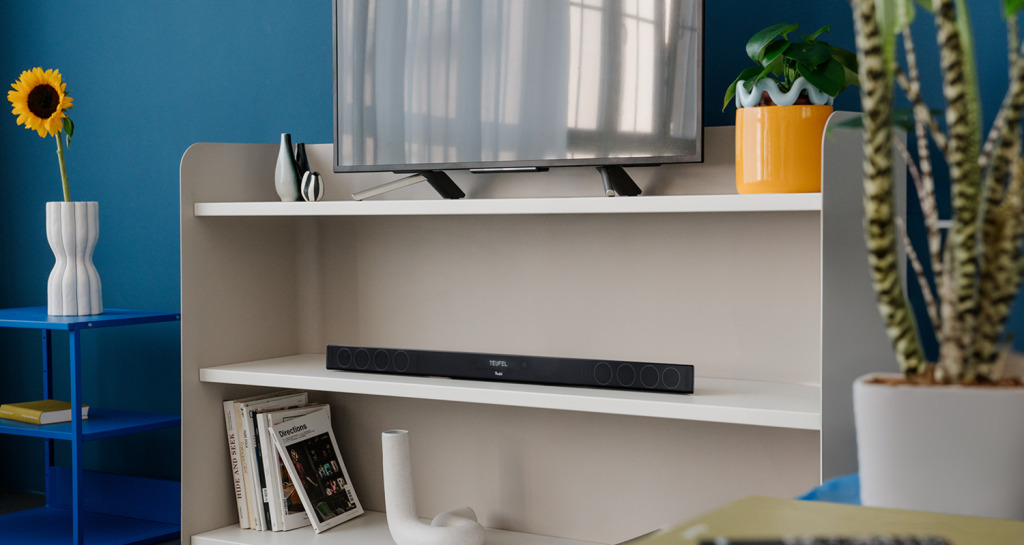
If you want to enjoy Dolby Atmos without installing an extensive speaker setup, a soundbar offers a space-saving alternative to a full multichannel systemOpens in new tab.
▶ CINEBAR 11 for Dolby Atmos 2.1-SetOpens in new tab: The slim soundbar supports Dolby Atmos for music, movies and games and comes with a wireless T 6 subwoofer. Virtual surround soundOpens in new tab is built in, while you can add EFFEKT 2Opens in new tab wireless rear speakers for true surround sound.
▶ CINEBAR 22 for Dolby Atmos 5.1-SetOpens in new tab: The larger soundbar supports Dolby Atmos and DTS:XOpens in new tab. Side-firing drivers use sound reflections to create a surround sound experience, while optional EFFEKT 2 rear speakers can expand the system to a 7.1 setup.
▶ Find more suitable solutions in the Dolby Atmos category of the Teufel ShopOpens in new tab.
More Teufel home cinema products
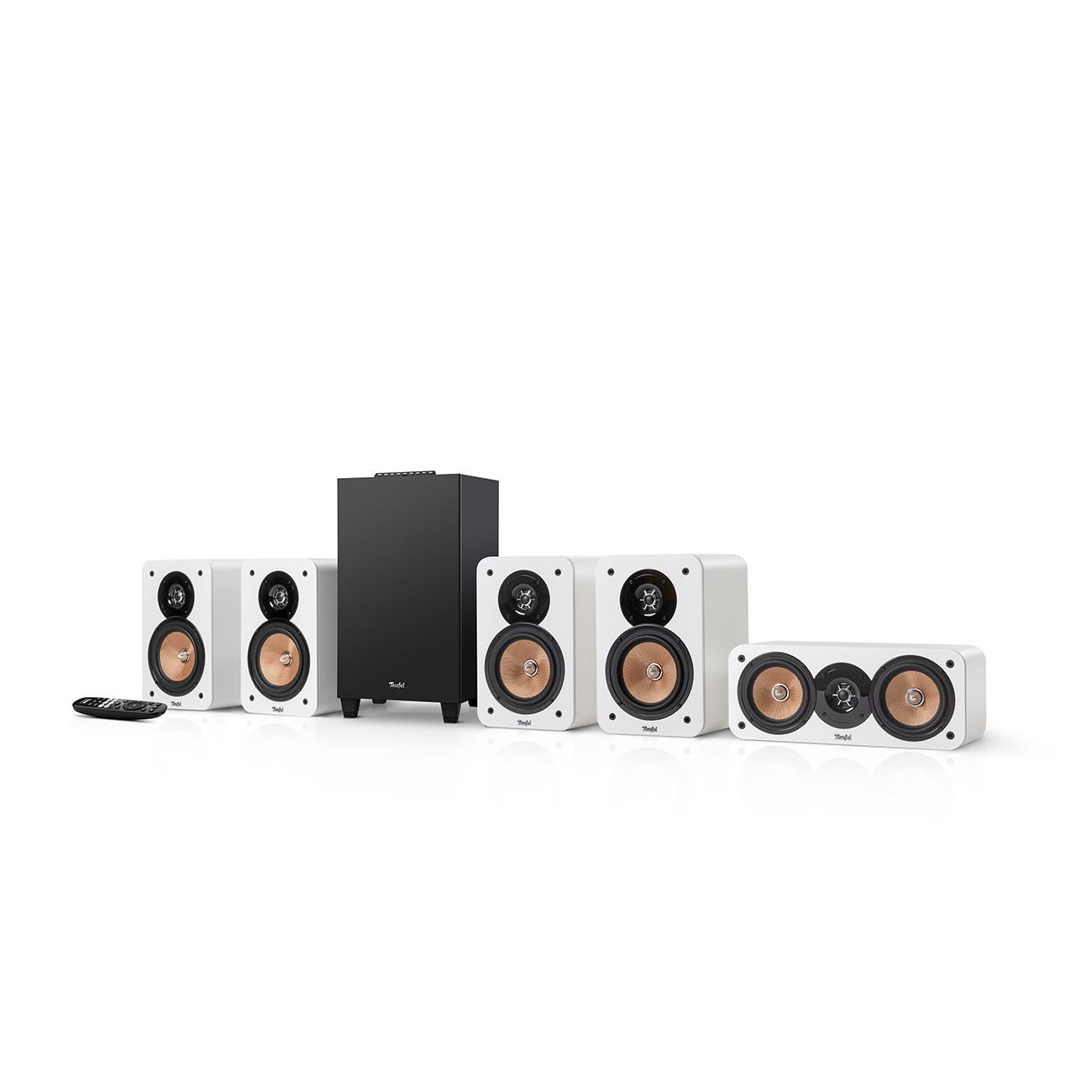
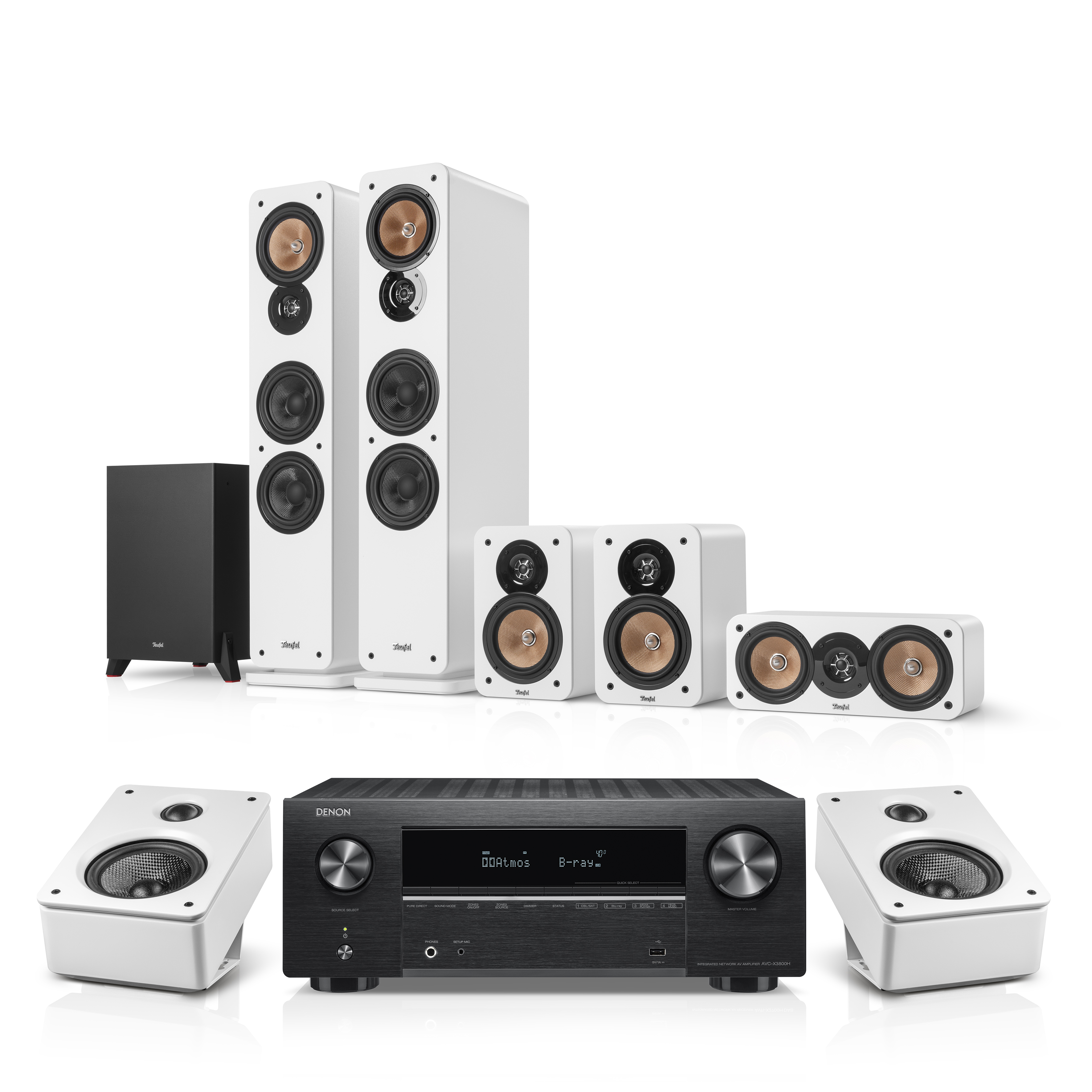
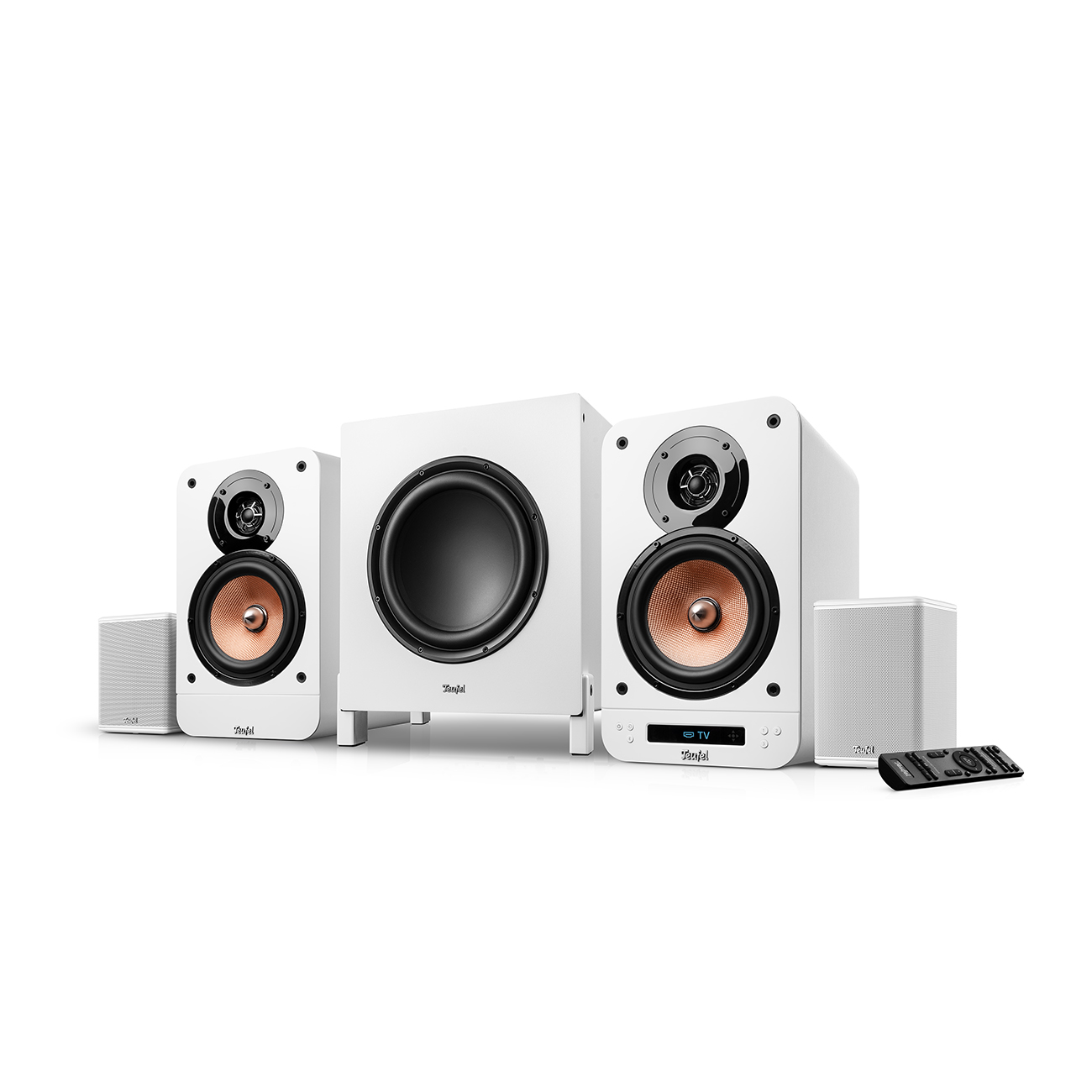
Dolby Atmos Music: The Key Takeaways
- Dolby Atmos Music adds a new spatial dimension to the mix, including the ability to place sound above the listener.
- Audio Objects allow individual sounds to be placed freely within the sound field, without being tied to specific speaker channels.
- To play back Dolby Atmos, the content, source and playback device all need to support the format.
- Dolby Atmos Music can be played through compatible speakers and soundbar systems, while headphones use binaural processing to create the impression of spatial sound.
FAQs: Dolby Atmos Music
Not necessarily. Compatible devices can process an Atmos mix binaurally for headphone playback. The exact requirements depend on the device and streaming service.
Not necessarily. Dolby Atmos offers a different way of placing sounds within the listening space, but that alone doesn’t determine the quality of the mix. A carefully produced stereo mix can be just as compelling.
Yes. A soundbar can play Dolby Atmos Music as long as it supports Dolby Atmos and receives a compatible Atmos signal. The way the spatial effect is reproduced varies depending on the model.
Title image: Teufel