

Vinyl fans know the problem: records picked up at flea markets often look as though they’ve been through a few wild parties before ending up forgotten under someone’s sofa. Dust, grease and grime can build up on the surface, taking away that characteristic vinyl shine. This can affect the sound and even cause damage to the stylus. So what’s the best way to clean your records while keeping the surface in good condition? Let’s take a look.
How to clean vinyl records properly: a Teufel tutorial
Alongside the help pages in Teufel Support, we now also offer informative tutorials on our YouTube channelOpens in new tab. This video shows you how to clean your vinyl records:
Cleaning vinyl records: all the steps from the tutorial video in one place
If you’re short on time or want to revisit the steps after watching the video, here’s a quick overview of the record-cleaning methods featured in the Teufel tutorial.
- Dry cleaning
You can generally dry-clean your vinyl records with a record brush before each listen. This removes loose dust and helps prevent dirt from building up on the surface in the first place.
- Wet cleaning
For stubborn dirt, use a dedicated record-cleaning solution for wet cleaning — never use washing-up liquid! Simply wipe the cleaner and any dirt away with a microfibre cloth, always following the direction of the grooves.
- Using Discofilm
Discofilm can also help remove stubborn dirt from the grooves. This gel is spread evenly over the record’s playing surface and left to dry completely. Once it has dried, carefully peel the film away, taking the trapped dust, grease and dirt with it.
- Record cleaning machine
For your record collection, it may be worth investing in a record cleaning machine. If you only have a few records to clean, you can also use the cleaning service at a record shop you trust.
Record cleaning essentials
Sooner or later, dust will find its way onto your records, even if you always put them straight back in their sleeves after listening. That’s because vinyl (more precisely, polyvinyl chloride) becomes statically charged and attracts dust. What many vinyl fans overlook is that dust can also collect inside the record sleeve or its inner lining.
In short, if you want to enjoy your records without all the crackling and pops, it’s best to remove dust and clean the record before each playback. The easiest way to do this is with a record brush, which should really be part of every vinyl lover’s basic kit. There are plenty of different types available, made from a range of materials and in various designs. Most use carbon or carbon-fibre bristles, which tend to deliver good results in practice.
Complete your vinyl setup with Teufel stereo sets

KOMBO 11
229,99 €
DEFINION 3
1199,99 €
DEFINION 3 + DENON DRA-900H + DUAL DT 500
2169,99 €Using a record brush is incredibly simple: just brush the record in the direction of the grooves, without using any water or other liquids, and you’re done.
Helpful (and less helpful) home remedies for cleaning vinyl records
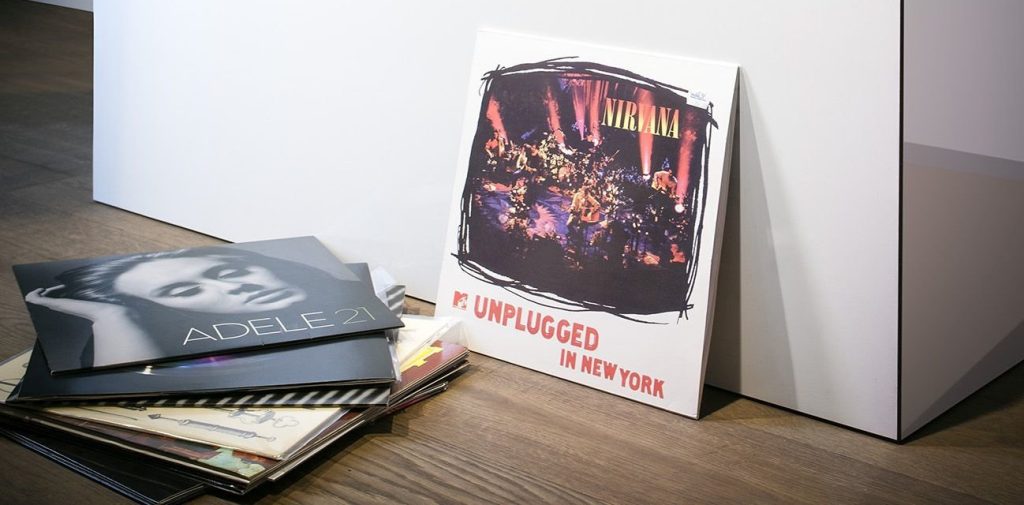
Things get a little trickier when dust or other residue sticks to the surface of the record. In that case, wet cleaning is usually the only option. For the safest approach, use a dedicated record-cleaning solution together with a microfibre cloth. Mixing your own cleaning solution may save money, but it can also quickly cause damage. Many vinyl enthusiasts will be alarmed at the suggestion that all you need to clean a record is alcohol, water and a drop of washing-up liquid.
If you want to mix your own cleaning solution, first make sure you know what material the record is made from. Alcohol-based mixtures are only suitable for PVC vinyl and should never be used on shellac or acetate records. If you’re not sure what material you’re dealing with, it’s best to use a cleaning product specifically designed for records. Washing-up liquid is not suitable as it can leave behind residue.
Discofilm on vinyl
Ever heard of Discofilm? This unusual cleaning method has been around for years and is designed specifically for removing dirt from vinyl records. Discofilm is a gel-like solution that you spread over the record, making sure the entire playing surface is covered from edge to edge. The same process is then repeated on the other side.
Once applied, the gel needs time to dry completely. The manufacturer currently recommends allowing around 2 to 4 hours, depending on the room temperature and humidity. As it dries, the gel forms a film that traps dust, grease and other dirt. Once fully dry, the film can be carefully peeled off the record in one piece, taking the accumulated grime with it.
Cleaning vinyl records: the high-end solution
The most expensive option is also arguably the easiest and most effective way to get your records thoroughly clean: a dedicated record cleaning machine. There’s a huge range of designs and price points to choose from. A Knosti machine, for example, has a relatively simple design and costs around €100. It consists of a narrow cleaning basin with brushes and a hand crank. A special label protector also keeps the paper labels dry while the record is being cleaned. The record is secured around a spindle and rotated using the crank.
The Okki Nokki ONE, on the other hand, is considerably more sophisticated — and more expensive — with an electric motor and built-in vacuum system. Once the cleaning process is complete, it removes the liquid from the record using suction. In return, this fully automatic machine promises spotless records with minimal effort.
Further reading: The dos and don’ts of caring for your vinyl recordsOpens in new tab.
Analogue sound at its finest with Teufel
 Opens in new tab
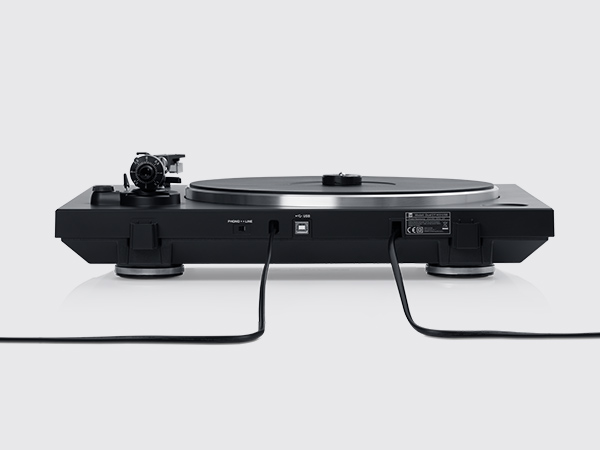
▶ DUAL DT 400 USBOpens in new tab: This turntable brings authentic vinyl sound to both LPs and singles. It features a high-quality AT 3600 moving-magnet cartridge from Audio-Technica and can be connected to all Teufel all-in-one systemsOpens in new tab. The turntable uses a belt drive and DC servo motor. Its USB output also lets you digitise your vinyl collection.
▶ ULTIMA 40 ACTIVE 3Opens in new tab: With a built-in amplifier, this active 3-way floorstanding speaker pair doesn’t need a separate receiver. If your turntable has a built-in phono preamp, you can connect it directly to the analogue input. Otherwise, you’ll need an external phono preamp. You also get 260 watts of total power, Bluetooth aptX®, HDMI ARCOpens in new tab, an optical input and a USB-C sound card.
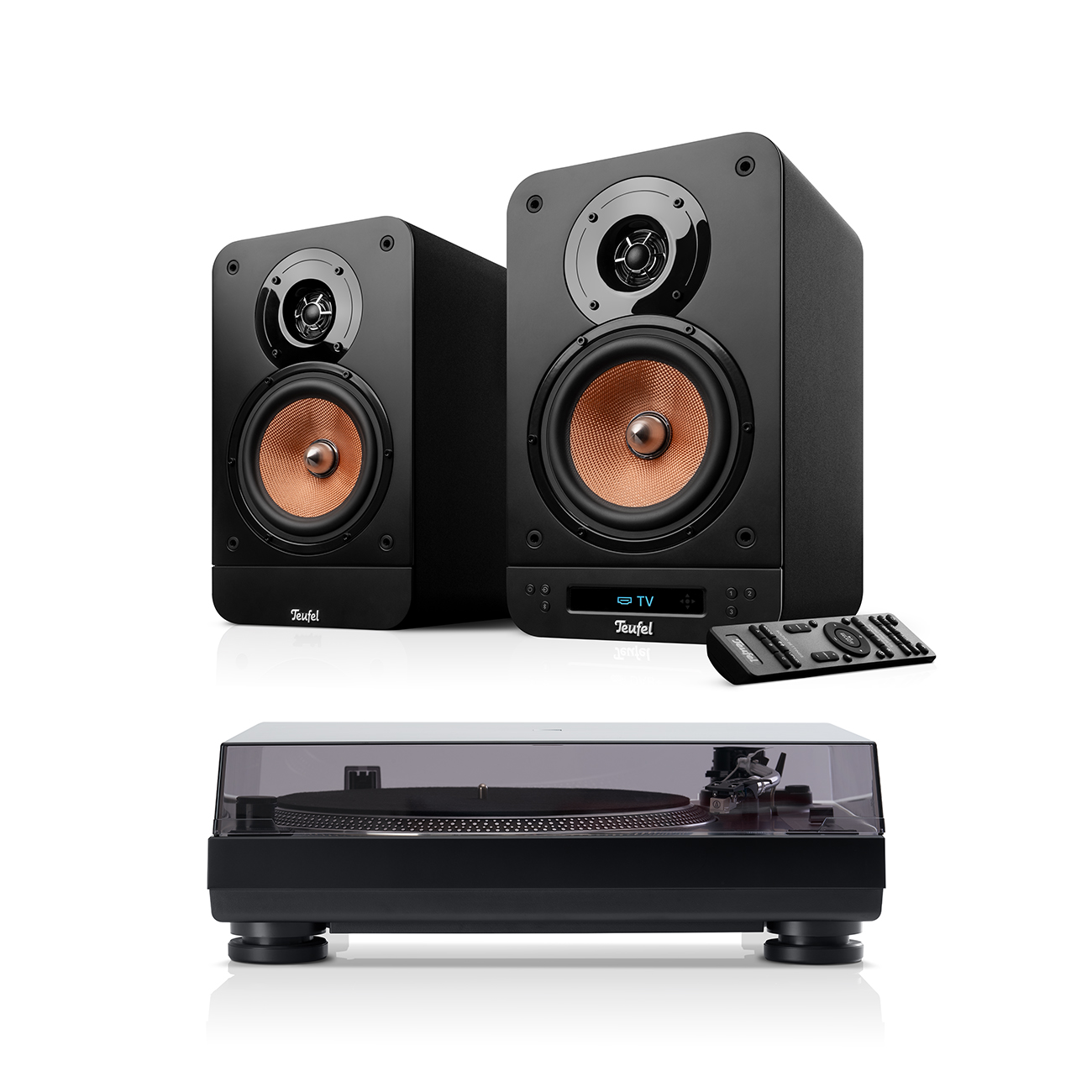
The ideal match for your turntable: Teufel all-in-one systems
ULTIMA 25 ACTIVE 2 + DUAL DT 250 USB
749,99 €
ULTIMA 40 ACTIVE 3 + DUAL DT 250
899,99 €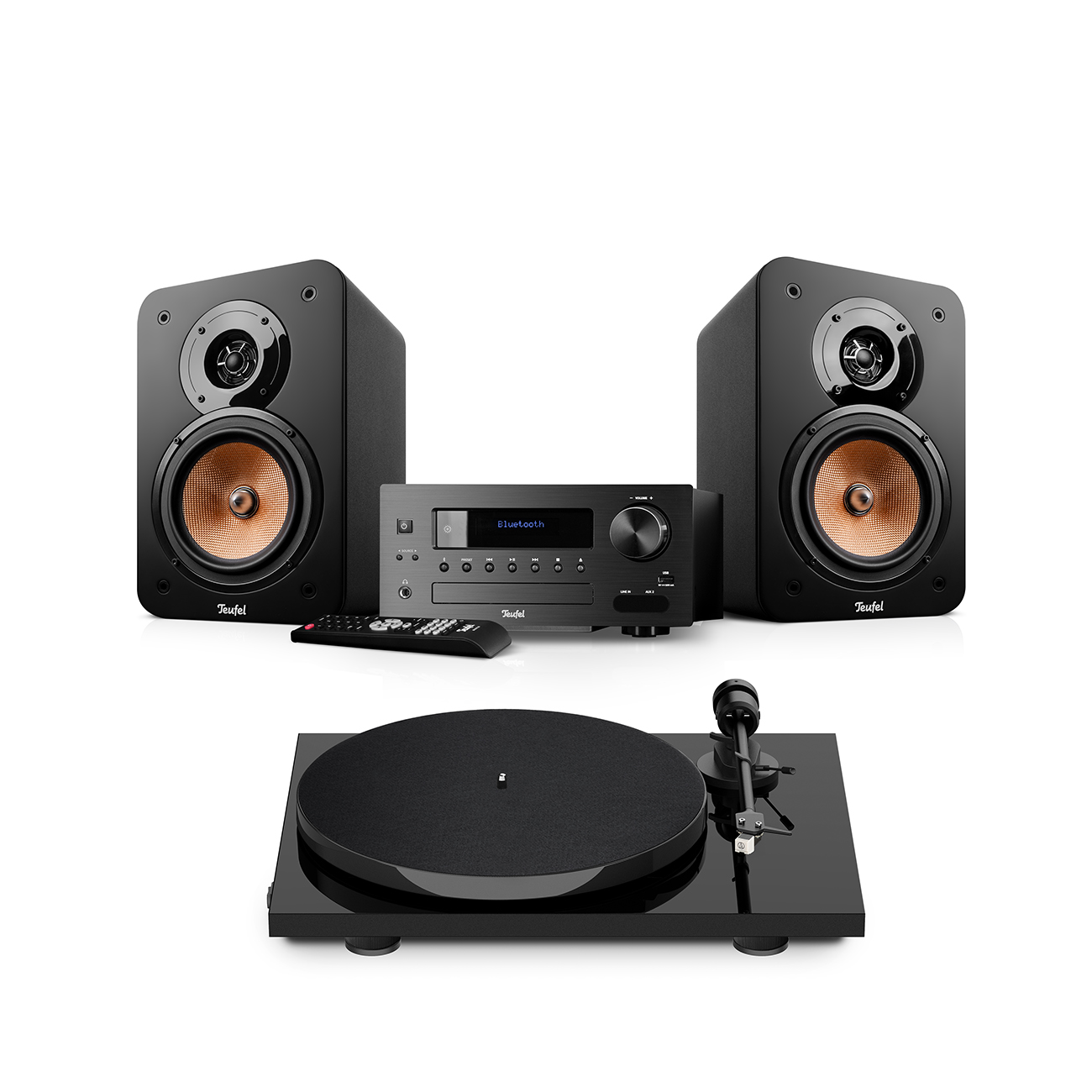
ULTIMA 20 KOMBO 2 + Pro-Ject E1 BT
749,99 €Conclusion: How to clean vinyl records, from light dust to stubborn dirt
- Dust can be easily removed from vinyl records with a record brush fitted with carbon-fibre bristles.
- For wet cleaning, a dedicated record-cleaning solution and a microfibre cloth are the safest choice.
- Homemade cleaning solutions should only be used on PVC vinyl. If you’re unsure what material a record is made from, use a cleaning product specifically designed for the job.
- Record cleaning machines offer a convenient, automated way to keep your vinyl records clean.
Frequently asked questions about cleaning vinyl records
Some household methods, such as using distilled water and a microfibre cloth, are suitable for cleaning vinyl records. Washing-up liquid and harsh cleaning products, on the other hand, should be avoided as they can leave residue or damage the record’s surface.
Discofilm is a gel-like cleaning solution that you spread over the record. Once it has dried, you carefully peel it away, taking any dust, grease and dirt with it. It’s a particularly thorough cleaning method, but one that’s best suited to more experienced users.
A dry clean before each listen is recommended. Wet cleaning, however, is only necessary when there’s visible dirt or you notice audible issues, so you don’t put unnecessary strain on the record.
Improper cleaning can damage your records. Excessive pressure, unsuitable cleaning products or wiping across the grooves can harm the surface. Always clean gently in the direction of the grooves and keep the label dry.



Leave a Reply