
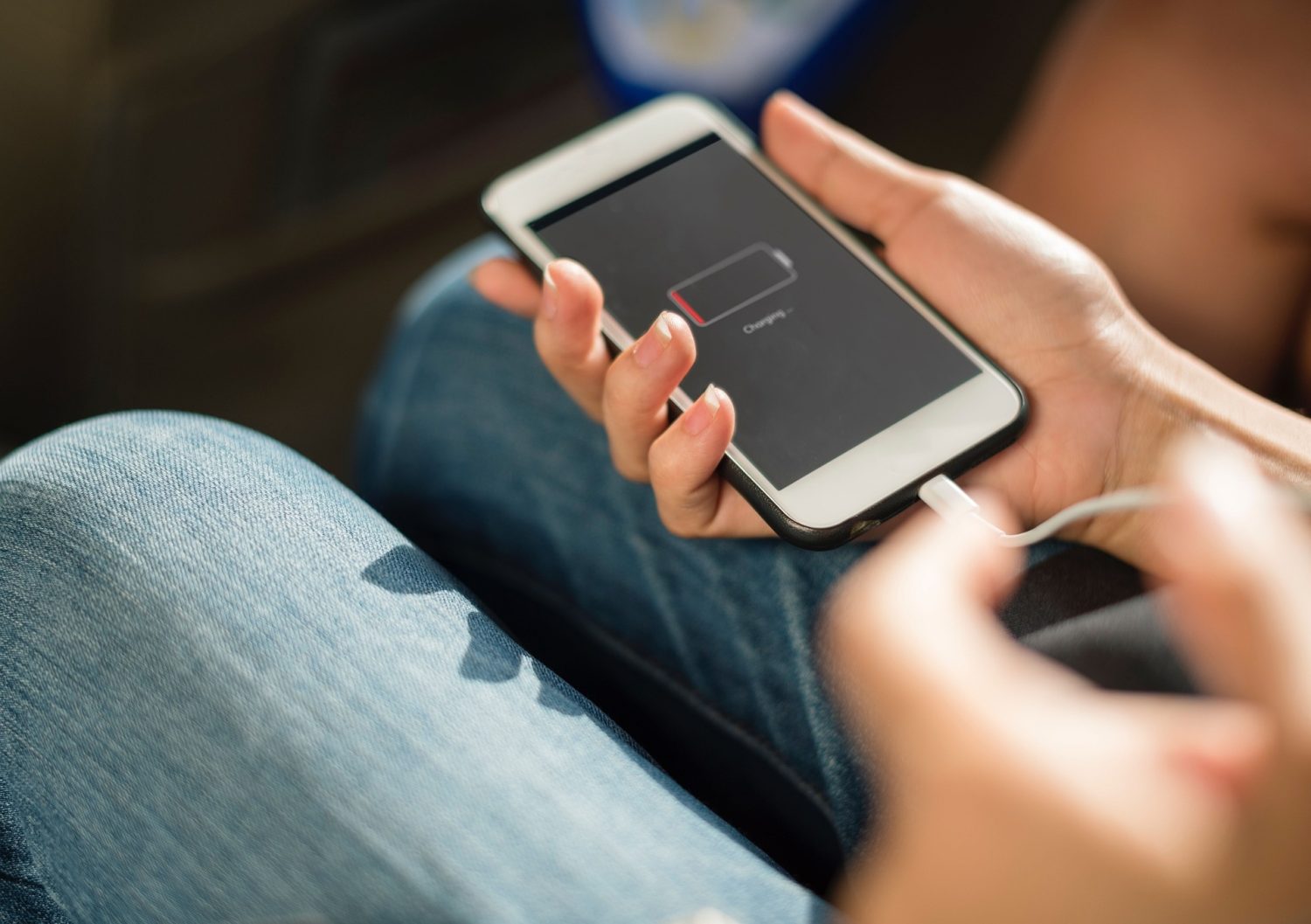

Whether it’s your smartphone, e-bike, headphones or portable speaker, a battery that suddenly won’t charge can be a real nuisance. But what exactly is deep discharge, what causes it, and can a deeply discharged battery be brought back to life? Find out everything you need to know in this guide.
What exactly is deep discharge?
A battery that won’t charge can be a frustrating problem. One possible cause is deep discharge, also known as over-discharge. This happens when the battery voltage drops too low. The charger then refuses to charge the battery as a safety measure. Every battery has a specified end-of-discharge voltage – for a lithium-ion battery, for example, this is 2.5 volts per cell. If the voltage falls below this threshold, deep discharge occurs. It’s best to avoid this wherever possible, as it can damage the battery and, in the worst case, render it unusable.
Further reading: Learn more about different types of batteries and how they differ in our blogOpens in new tab.
What causes a battery to become deeply discharged?
The most common cause of deep discharge is leaving a battery unused and uncharged for an extended period. This can be particularly problematic with lithium-ion batteries, which are found in most electronic devices today and are also widely used in speakers and e-bikes. The reason is self-discharge, which cannot be completely avoided: even when they’re not in use, batteries gradually lose charge. Although the amount is small, a lithium-ion battery can be completely drained after just a few months. If it isn’t recharged soon afterwards, the voltage will also continue to drop, eventually leading to deep discharge.
Another possible cause is faulty electronics. Battery-powered devices generally have a battery management system (BMS) that protects the battery against excessively high or low voltage. If this protection fails, the battery can become deeply discharged.
The battery may also simply have reached the end of its useful life. Lithium-ion batteries gradually lose capacity over time, and eventually they reach a point where they can no longer hold a charge. At that stage, the battery can no longer be recharged and is effectively unusable.
The most common causes of deep discharge:
- Self-discharge after prolonged periods of non-use
- Faulty device electronics
- Battery has reached the end of its service life
- Incorrect charging or an unsuitable or defective charger
Charging cases for Teufel in-ear headphones



How damaging is deep discharge to a battery?
Deep discharge will generally shorten a battery’s lifespan. It can also cause irreversible damage, potentially resulting in short circuits. Lithium-ion batteries are particularly sensitive – in the worst case, deep discharge can even cause them to catch fire, although this is now extremely rare with newer batteries. Repeated deep discharge can also significantly reduce a battery’s capacity, substantially shortening its overall lifespan. If the battery stops charging altogether, it has reached the end of the road. That’s why you should avoid deep discharge wherever possible. You’ll find some tips on how to do this below.
Repairing a deeply discharged battery – is it a good idea?
If a battery no longer charges, you should first check whether deep discharge is actually the cause. If the battery contacts are accessible, you can measure the voltage with a multimeter. Set the device to DC voltage, place the red probe on the positive terminal and the black probe on the negative terminal, then read the displayed value. You can then compare the measured voltage with the battery’s nominal voltage or the manufacturer’s specifications. If the battery is a sealed pack, you should not open it to access individual cells. If in doubt, it’s better to consult a qualified professional.
But what if the battery really is deeply discharged and won’t charge anymore? First of all, you should avoid opening the battery yourself or connecting it in parallel with another battery – unless you really know what you’re doing. There are plenty of YouTube videos, such as this oneOpens in new tab, that show how a battery can supposedly be brought back to life with a few simple tricks. However, we strongly advise against trying this yourself for the following reason: a revived battery – especially a lithium-ion battery – can be unstable and poses a potential fire hazard. Its capacity is also likely to continue declining, so its remaining lifespan will be limited anyway.
Battery won’t charge – is it really deeply discharged?
If a battery stops responding, deep discharge isn’t necessarily the cause. A faulty charger, damaged cable or unsuitable temperature can also prevent a battery from charging. If the battery is very cold or hot, let it return to normal room temperature before trying to charge it again.
Another possible cause is the battery management system (BMS). This electronic protection circuit monitors the battery and can interrupt charging or discharging if, for example, the voltage or temperature falls outside the permitted range.
How to recharge a deeply discharged battery
Before replacing the battery, there are a few safe steps you can try:
- Connect the correct charger
Only use a charger designed for the battery or device, and leave the battery connected for a while. If it has been heavily discharged, it may take some time before the device responds again. - Monitor the charging process
Check whether the battery starts charging again after a while and whether the device switches on. If the battery becomes unusually hot, changes shape, becomes swollen or shows signs of damage, stop charging immediately and do not use it again. - If nothing happens, don’t experiment further
If the battery is still not detected or charging after an extended period, don’t attempt any further DIY revival methods. Instead, have the battery checked by the manufacturer or a qualified specialist. - Replace the battery if necessary
If the battery can no longer be charged or quickly loses its charge again, deep discharge may have caused permanent damage. In this case, replacing the battery is the most sensible option.
Keep your devices charged with VARTA power banks
Quality matters to us, which is why Teufel recommends selected gadgets such as VARTA power banks to keep your portable audio devices charged on the go. A power bank and a speaker are an unbeatable combination!

▶ VARTA Wireless Power BankOpens in new tab: With this model, you don’t even need a cable. The integrated wireless charger lets you charge Qi-compatible devices wirelessly. It also includes all the features of the first power bank.
Note: Remember to recharge the power bank regularly too, so its battery doesn’t become deeply discharged and leave you without power when you need it most!
Teufel Bluetooth speakers



How to protect your battery from deep discharge
In this guide, you’ve learned that trying to revive a battery that has been deeply discharged isn’t a good idea. But how can you prevent a battery from becoming deeply discharged in the first place? Here are some tips:
- Check the charge level regularly: Don’t leave lithium-ion batteries or battery-powered devices unused for long periods. Check the charge level at least every few weeks and recharge them if necessary.
- Charge before storing: If you won’t be using a battery for an extended period, charge it to 60–80% before putting it away.
- Store it properly: Always store batteries at room temperature and keep them out of direct sunlight.
- Charge correctly: Try not to let your device’s battery drop into the single-digit percentage range. Connect the charger when the battery reaches 20%. The ideal charge level for lithium-ion batteries is between 20 and 80%.
- Use deep-discharge protection: Depending on the type of battery, deep-discharge protection can be useful. It is particularly important for lithium-ion batteries, which is why most batteries of this type already have a battery management system (BMS) as standard.
Good to know: Teufel’s battery-powered devices have built-in charging protection to help you charge the battery correctly. And if a battery does eventually stop working, Teufel also offers replacement batteriesOpens in new tab for some of its devices.
Frequently asked questions about battery deep discharge
How can I tell if a battery is deeply discharged?
A deeply discharged battery will often no longer respond to the charger, or the device may no longer switch on. However, this alone does not necessarily mean the battery is deeply discharged. A faulty charging cable, unsuitable charger, unsuitable temperature or a protective shutdown by the battery electronics could also be the cause.
Can a deeply discharged battery be recharged?
In some cases, a deeply discharged battery can still be recharged, provided the cells have not been permanently damaged and the protection circuit allows charging. Only use a charger designed for the battery in question and monitor the charging process. Avoid opening the battery yourself, bypassing the protection circuit or trying to jump-start it with an external power source.
Is a deeply discharged lithium-ion battery dangerous?
A deeply discharged lithium-ion battery may have suffered permanent damage. Take particular care with batteries that are swollen, deformed, leaking or unusually hot. Such batteries must not be charged, used or opened and should be disposed of properly.
How can deep discharge be prevented?
You can prevent deep discharge by not allowing lithium-ion batteries to run completely flat and by storing them with some charge if they won’t be used for an extended period. For longer-term storage, a charge level of around 60 to 80% is recommended. The battery should also be protected from extreme heat and cold and recharged occasionally during extended periods of storage.
- Cover image: StockSnapOpens in new tab on PixabayOpens in new tab. Pixabay LicenseOpens in new tab.



Leave a Reply